
Today’s retail success depends on more than just great products. A retail environment is a thoughtfully designed ecosystem that shapes customer behavior across every physical and digital touchpoint in your business. It includes every place shoppers interact with your brand, from the lighting in your flagship store to the checkout flow on your mobile app.
Optimizing your retail environment requires balancing tangible elements like layout and sensory design with the invisible infrastructure of inventory management and data.
To get it right, you need a clear understanding of the core components that shape these environments and the strategies that turn foot traffic into revenue.
- What is a retail environment?
- Why retail environments matter in 2026
- Types of retail environments
- Core elements of a retail environment
- Store layout and flow considerations
- Retail atmospherics that influence shopper experience
- Visual merchandising in modern retail environments
- Role of technology in retail environments
- Experiences and engagement in retail spaces
- Sustainability considerations in retail environments
- Future trends shaping retail environments
- Retail environment examples across industries
What is a retail environment?
A retail environment is a deliberately designed, multi-sensory ecosystem that includes every physical and digital touchpoint where customers interact with your merchandise. This includes the store layout, lighting, music and scent, as well as the digital interface of your ecommerce site.
It’s the stage where the transaction happens, but more importantly, it’s where the brand relationship is built. A retail environment is designed to guide the customer journey, influence mood and facilitate the buying process through strategic design and technology. Whether a customer is walking through a door or scrolling on a phone, they are entering your environment.
Experienced retailers know that a retail environment must adapt to customer needs and market trends. That includes tangible elements like shelving and inventory, as well as intangible factors like the speed of your Wi-Fi and the attitude of your staff.
Why retail environments matter in 2026
As the retail market becomes more saturated, purely transactional spaces are increasingly left behind. In 2026, a retail environment is your primary differentiator in a crowded market. It dictates how a customer feels about your brand the moment they engage with it.
A well-executed environment reduces friction. It makes it easy for customers to find what they need, ask questions and pay without hassle. When customers feel comfortable and oriented, they stay longer.
Increased dwell time often correlates with higher average transaction values. Conversely, a chaotic or poorly lit environment can drive customers away before they even look at a price tag. Your environment is essentially your silent salesperson, working to convert traffic into revenue 24/7.
At the end of the day, the environment serves as a physical manifestation of your brand values. In an era where consumers have endless options online, the physical or digital environment provides the context that justifies the price point and builds loyalty.
Types of retail environments
While the concept is broad, retail environments generally fall into three distinct categories. Understanding the nuances of each helps you maintain brand consistency, regardless of where the sale takes place.
Physical retail environments
This is the traditional brick-and-mortar store. It relies heavily on sensory inputs like touch, smell, sight and sound to create an immersive experience. The physical environment allows for immediate product gratification and face-to-face customer service.
In this space, you have total control over the atmosphere. You determine the path the customer walks, the music they hear and the products they see first. It’s the highest-bandwidth channel for communicating your brand story.
Digital retail environments
This includes your ecommerce website, mobile app and social media marketplaces. Here, the “environment” is defined by user interface (UI), site speed, navigation logic and visual assets. The goal is convenience and speed rather than physical immersion.
In a digital environment, “layout” translates to site architecture. “Signage” becomes your navigation menu and call-to-action buttons. While you cannot control the lighting in the customer’s room, you can control the clarity of your product photography and the ease of your checkout flow.
That’s why an intuitive ecommerce platform matters. With Lightspeed eCom, you can build a storefront that reflects your brand, scales with your business and delivers the speed and efficiency today’s shoppers expect.
Omnichannel retail environments
This is the gold standard for modern retail. Anomnichannel retail environment connects the physical and digital worlds seamlessly. It allows a customer to buy online and pick up in store (BOPIS) or browse in a showroom and order for home delivery, with inventory data synced across all channels.
This environment relies on a unified technological infrastructure. Your POS system, ecommerce platform and inventory management software work together to ensure the customer sees the same pricing, availability and branding, no matter how they choose to shop.
Core elements of a retail environment
Creating a cohesive space requires balancing several foundational components. These elements work together to shape the customer’s perception and behavior.
Store layout and design
Your layout determines how traffic flows through your space. It includes the placement of fixtures, aisles and the checkout counter. A strategicretail store set up guides shoppers past high-margin items and prevents bottlenecks.
Different layouts serve different goals. For example:
- Grid layout: Common in grocery stores, this layout maximizes product density and operational efficiency.
- Loop layout: Guides customers along a defined path, ensuring they pass through every department.
- Free-flow layout: Encourages exploration and browsing, and is often used in boutique store design.
Atmospherics and sensory elements
These are the intangible features that set the mood. Lighting, temperature, music and scent all contribute to the “vibe” of the store. They operate on a subconscious level to make customers feel relaxed or energized.
Atmospherics can change the perception of value. Soft, warm lighting and classical music might suggest luxury and encourage lingering. Bright, cool lighting and upbeat pop music might suggest value and efficiency.
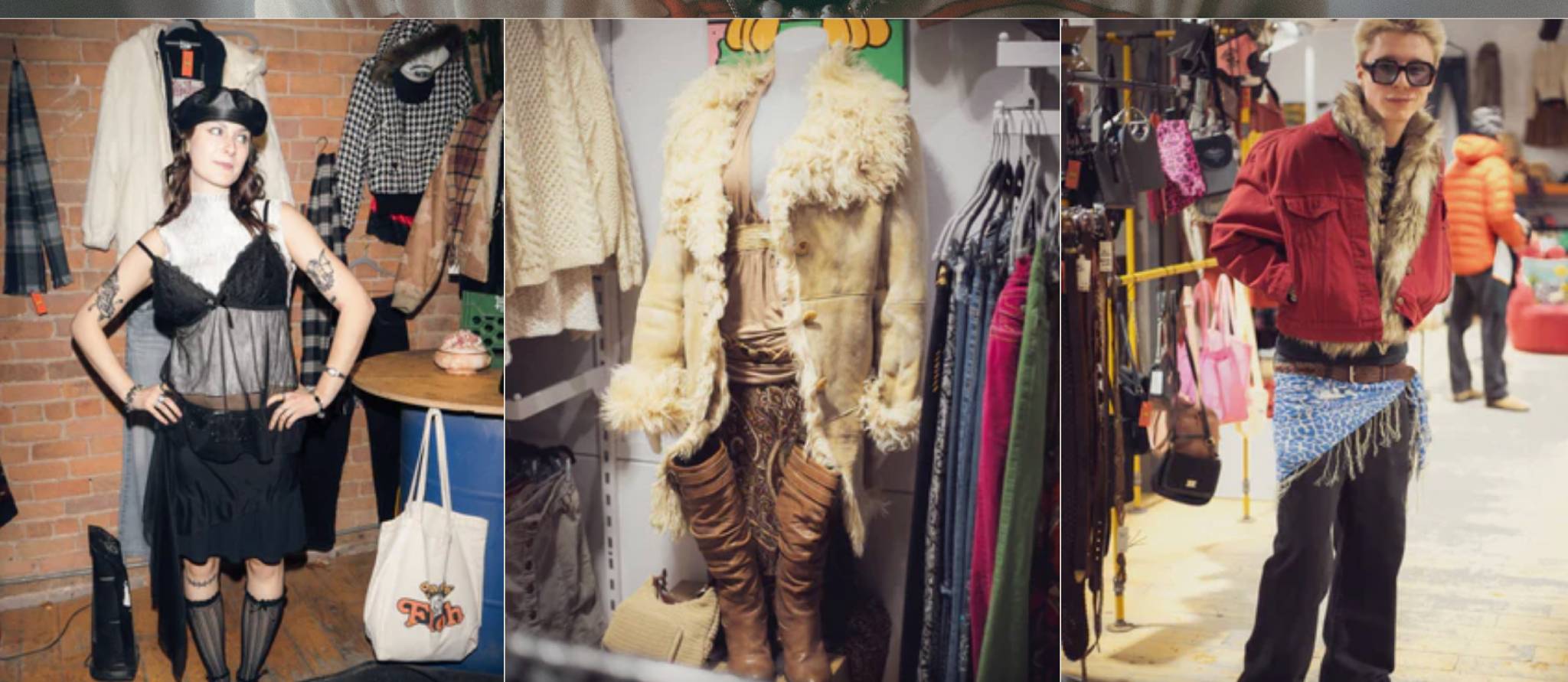
Lightspeed customerMarché Flohhas created an atmosphere that feels bright and bold from the moment you walk through the door. The team has fully embraced a strong personality and a vibrant brand.
Visual merchandising and displays
Visual merchandising and displays focus on how you present your inventory to customers. It involves window displays, mannequins, signage and shelf arrangement. Effective visual merchandising tells a story about the product and shows the customer how it fits into their life.
Merchandising is not just about making things look pretty. It comes down to logic. Grouping products by color, use case or collection helps the customer make sense of the assortment. It reduces the cognitive load required to shop.
Customer service and staff interaction
Your team members are a critical part of the environment. Friendly, knowledgeable staff can elevate a mediocre physical space. Their behavior and appearance should align with the brand’s aesthetic and values. They should guide customers, answer questions and facilitate sales.
Technology and digital touchpoints
Tech is the invisible infrastructure of the retail environment. This includes your POS system, inventory management software, digital signage and interactive kiosks. It ensures the environment functions smoothly and data is accurate.
Technology reduces friction. A mobile POS allows transactions to happen anywhere in the store, removing the barrier of a checkout line. Inventory management systems ensure that the product the customer wants is actually in stock.
With Lightspeed Scanner, sales associates can take payments on the sales floor while accessing real-time inventory and product data from their phone. That means faster answers, shorter lines and a more seamless customer experience.
Brand cues and consistency
Every element, from the color of the walls to the font on the receipt, serves as a brand cue. Consistency across these elements builds trust. It reinforces your identity so customers instantly recognize they are in your environment.
Inconsistent branding creates confusion. If your website looks sleek and modern but your store looks cluttered and dated, the customer experiences a disconnect. A unified environment strengthens brand recall.
Store layout and flow considerations
The way a customer moves through your store is rarely accidental. A well-designed shop floor plan can engineer navigation to maximize exposure to your products.
Customer movement and navigation
Here’s something retailers may overlook: most customers naturally turn right when they enter a store. You can use this tendency to place your newest or most profitable stock in that “power wall” area. Wide aisles encourage exploration, while narrow pathways can create a sense of urgency or intimacy.
Clear sightlines are essential. Customers need to be able to orient themselves immediately. If they feel lost or trapped, the environment becomes stressful rather than inviting. You can use lighting and flooring changes to subtly delineate different zones without building walls.
The “decompression zone” is the first few feet inside the door. Customers need a moment to adjust to the new environment. Placing high-value merchandise here is often ineffective because shoppers are still transitioning from the outside world.
Checkout and high-impact zones
The checkout area is the final impression. It should be easy to locate but not dominate the entrance. This zone is prime real estate for impulse purchases, but it must remain clutter-free to keep the line moving.
Modern retail environments often move away from the massive “cash wrap” counter. Using tablets or smaller counters removes the physical barrier between staff and customers. This creates a more open, relational environment rather than a transactional one.
Retail atmospherics that influence shopper experience
Atmospherics are the sensory layers you add to the physical structure. They turn a building into a brand experience.
Lighting and visual comfort
Lighting does more than just illuminate products. It directs attention. Spotlights can highlight premium merchandise, while softer ambient lighting can make a fitting room feel flattering. Poor lighting can make a store feel dirty or dated.
- Ambient lighting: Provides the overall illumination for the store.
- Accent lighting: Highlights specific displays or products to draw the eye.
- Task lighting: Illuminates work areas like the checkout counter or fitting rooms.
Music, sound and acoustics
The tempo and volume of your music influence the pace of shopping. Fast music tends to speed up traffic flow, while slower tempos encourage browsing. Acoustics matter too; a store that is too loud or echoes can be exhausting for shoppers and staff.
You can curate playlists that match your target demographic. For example, a streetwear store might play hip-hop to build energy, while a local boutique might play ambient tracks to induce relaxation. The absence of sound can be just as noticeable, often making a space feel awkward or empty.
Scent and environmental comfort
Scent marketing is a powerful tool for memory recall. A signature scent can trigger an emotional connection to the brand. However, it must be subtle; an overpowering smell can drive customers out just as quickly as a bad layout.
Temperature control is another invisible atmospheric. If a store is too hot or too cold, customers will leave. Comfortable customers are more likely to take their time trying on clothes or testing products.
Visual merchandising in modern retail environments
Visual merchandising bridges the gap between the product and the customer’s desire.
Product presentation and signage
How you group products matters. Grouping by color, collection or lifestyle helps customers visualize how items work together. Retail signage should be clear and informative, acting as a guide when staff aren’t immediately available.
- Informational signage: Helps customers navigate (e.g., “Men’s,” “Fitting Rooms”).
- Promotional signage: Highlights sales or special offers.
- Lifestyle graphics: Shows the product in use to inspire the customer.
Window displays and in-store communication
Your window display is the handshake with the street. It needs to be arresting enough to stop foot traffic. Inside, displays should act as speed bumps, slowing customers down and encouraging them to engage with the merchandise.
You can rotate these displays frequently to keep the environment feeling fresh. A static environment can signal to repeat customers that nothing new has arrived.
Role of technology in retail environments
In 2026, technology is the backbone of the retail environment. It bridges the gap between operational efficiency and customer experience.
POS systems and digital displays
A modern retail POS does more than process payments. It’s a mobile tool that allows staff to check inventory, look up customer profiles and ring up sales from anywhere on the floor. This removes the physical barrier of a counter and makes the environment more fluid.
Digital displays can bring the endless aisle of ecommerce into the physical store. They allow customers to see color variations or sizes that aren’t currently on the shelf, saving the sale. This integration ensures that the physical limitations of the store do not limit revenue.
Online user experience and interface design
In the digital environment, a confusing checkout process is the digital equivalent of a blocked aisle. Fast load times, high-quality imagery and intuitive search functions are the “atmospherics” of the online world.
You can use data from your digital environment to inform your physical one. If a specific product is getting high traffic online, you might feature it prominently in your physical window display.
To better understand your store’s online performance, capabilities like Lightspeed Insights provide valuable visibility. These tools help retailers capture sales and inventory data, save and schedule reports and access real-time insights to understand what’s working and where there’s room to improve.
Experiences and engagement in retail spaces
Stores are becoming destinations for community and learning, not just buying.
You might see this in the form of in-store workshops, product demos or community events. These experiential retail moments give customers a reason to visit the physical environment when they could easily buy online. It transforms the store from a warehouse of goods into a hub of engagement.
Engagement can also be digital. Loyalty programs that offer personalized rewards create a sense of belonging. When a customer feels known and valued, they are more likely to engage with the brand across all environments.
Lightspeed Advanced Marketing makes it easy to launch and manage campaigns, helping retailers strengthen customer relationships and focus on delivering great experiences.
Sustainability considerations in retail environments
Sustainability is now a design requirement. Customers are increasingly conscious of the environmental impact of the places they shop.
This influences materials used in store build-outs, such as reclaimed wood or energy-efficient LED lighting. It also extends to operations, like offering digital receipts to reduce paper waste. A retail environment that demonstrateseco-consciousness aligns with the values of modern consumers.
- Materials: Using recycled or sustainable materials for fixtures and packaging.
- Energy: Implementing smart lighting and HVAC systems to reduce consumption.
- Waste: Reducing single-use plastics and offering recycling programs.
Future trends shaping retail environments
The retail environment is not static. It evolves as technology andconsumer habits change.
We are seeing a shift toward hyper-personalization. Stores may soon use geofencing to alert staff when a VIP customer enters. Flexible store formats are also rising, where modular fixtures allow the environment to change completely from season to season.
Another trend is the “dark store” or micro-fulfillment center. These are retail environments optimized purely for fulfilling online orders, removing the friction of pick-and-pack from the customer-facing floor.
Retail environment examples across industries
Different industries utilize their environments to solve specific customer needs.
- Fashion: These environments focus on lighting and mirrors to boost confidence. They often use “decompression zones” at the entrance to help shoppers transition from the busy street.
- Grocery: Here, the environment is built for efficiency and flow. Layouts are rigid to help customers find staples quickly, while end-caps disrupt the flow to trigger impulse buys.
- Electronics: These are high-touch environments. Tables are open and products are unboxed, encouraging customers to play and test the technology before buying.
FAQs
Why is the retail environment important for customer experience?
The retail environment sets the stage for how a customer perceives your brand and interacts with your products. A positive, well-designed environment reduces stress and friction, making the shopping experience enjoyable, which encourages customers to return and recommend your store to others.
How does a retail environment influence customer behavior?
Environmental cues like lighting, layout and music subconsciously direct a shopper’s pace and attention. For example, strategic product placement can increase impulse buys, while comfortable seating areas can extend the time a customer spends in the store, increasing the likelihood of a purchase.
What is the difference between a store environment and a retail environment?
A store environment typically refers specifically to the physical interior of a brick-and-mortar shop. A retail environment is a broader term that encompasses the physical store as well as digital channels, customer service interactions and the overall atmosphere across all touchpoints.
What role does technology play in modern retail environments?
Technology acts as the nervous system of a modern retail environment, connecting inventory, sales and customer data. Tools like mobile POS systems and digital signage enhance the customer experience by reducing wait times and providing instant product information, while backend systems ensure operations run smoothly.
What are the key elements of a retail environment?
The core elements include the physical layout and design, sensory atmospherics like lighting and sound, visual merchandising, the quality of customer service and the technology used to facilitate transactions. Together, these elements create the total customer experience.
Why is the retail environment important for sales and branding?
Your environment is the physical or digital embodiment of your brand’s values and aesthetic. A consistent and engaging environment builds brand trust and loyalty, while an optimized layout and atmosphere directly support sales goals by guiding customers toward purchase decisions.
What are examples of different retail environments?
Examples include physical spaces like flagship stores, pop-up shops and big-box retailers, as well as digital spaces like mobile apps, ecommerce websites and social media marketplaces. Each format offers a unique way for customers to engage with merchandise.

News you care about. Tips you can use.
Everything your business needs to grow, delivered straight to your inbox.