
🎧 Prefer to listen? Press play below:
We all know first impressions matter. In retail, that could mean the difference between a new customer and a lost sale: your store needs to deliver the best visual representation of your products at all times. That’s where your visual merchandising strategy comes in.
Visual merchandising encompasses everything from storefront and product displays to in-store signage. It’s the first step in establishing a connection with the shoppers who see or enter your store. Learn strategic design techniques and shopper psychology to transform your store into an aesthetic experience your customers will love.
Table of contents
- What is visual merchandising—and why does it matter?
- The core elements of strong product displays
- Visual merchandising techniques that drive sales
- What is a visual merchandiser?
- The best visual merchandising is unique to your brand
- What’s new: Latest trends in digital visual merchandising
Turn window shoppers into customers
From merchandising to the how sales associates approach customers, the image your store projects is more important than ever. Download our free guide to learn how to attract more customers and turn them into lifelong customers.
What is visual merchandising—and why does it matter?
Visual merchandising is a retail industry practice where merchandisers develop floor plans and 3D product displays to organize and showcase products to attract shoppers, influence the routes and flow of foot traffic, highlight strategic SKUs, and maximize in-store sales. Merchandisers typically group related products together and use signage to communicate their features and benefits.
In larger companies, merchandisers work hand-in-hand with retail marketing teams to build product displays that fit the brand’s image and guidelines. Independent retailers, on the other hand, tend to have more control over what displays look like and greater flexibility in terms of creative control.
The purpose of visual merchandising is to attract and engage customers and motivate them to make a purchase. Additionally, visual merchandisers help organize a store’s products so that it’s easier for customers to find exactly what they’re looking for.
The core elements of strong product displays
Various components come into play when crafting visual merchandising displays, but the considerations below are arguably the most important.
Focal point
The focal point is the part of the display you want people to focus on. Typically placed at eye level, it could be an item or group of products you want shoppers to notice.
Space
The amount of space between products can convey volumes. In retail, customers often equate space with luxury, which is why it’s common for high-end brands to put a lot of space between merchandise when displaying them in stores. In contrast, discount retailers have a tendency to fill up their shelves with more products, leaving less space between items.
Keep this concept in mind as you craft your displays. If you’re trying to position an item as one-of-a-kind or exclusive, then it makes sense to put more space around it. On the other hand, if you’re hosting a sale and communicating a deal, a fuller (though still neat and organized) display might make sense.
Color
Different colors evoke various emotions, memories, and behaviors in consumers. Red, for example, conveys energy and urgency which is why it’s often used on sale signs. Meanwhile, the color blue can convey trust and responsibility which is why it’s popular in the realm of financial services. Black, on the other hand, can represent luxury, so it’s commonly seen in high-end boutiques. Learn color psychology principles to choose your palette wisely.
Lighting
Optimal lighting can drastically improve the in-store experience and drive sales. Lighting can also help draw customers’ attention to specific parts of your store or display.
If you want to highlight certain items more than others, place them under brighter lighting. In some cases, lighting can also influence people’s moods and behaviors.
Brightly-lit displays can inspire energy and action, while displays with subdued lighting can help people slow down or feel more relaxed. Avoid harsh, unflattering lighting and poorly lit corners and displays; they can repel shoppers, diminish your brand, and reduce dwell time.
Intensity and color temperature matter too; for example, warm lighting can create a cozy ambiance, whereas cool lighting can make a space feel more spacious and modern.
Product placement
Product placement is another key factor in merchandising. Consumers tend to browse shelves at eye level. They also focus more on the items that are right in front of them, as opposed to those at the sides or at the back of displays. Place and arrange your products accordingly. You can, for example, place your high-margin items front and center, while placing lower-priced items at the sides or in the background.
Visual merchandising techniques that drive sales
Studies show that an appealing display can increase sales by up to 540%. Moreover, 84% of consumers believe that a store’s aesthetics significantly influence their purchasing decisions. Harnessing these insights can tailor your visual strategies to drive conversions. You don’t need to spend a lot of money to create product displays that beautifully showcase your products and convert more people in research mode into paying customers. Just follow these 11 visual merchandising tips and techniques:
- Appeal to the five senses
- Use design theory to build your displays
- Be bold
- Play off your store’s theme
- Guide customers through your store
- Add interesting signage
- Group products that are commonly bought together
- Routinely refresh your product displays
- Boost sales with six budget design ideas
- Understand your target customer’s psychographics
- Get inspired
Appeal to the 5 senses
While it’s tempting to focus on your product display’s visual look, don’t neglect the other four senses. Rich, sensory environments have the power to increase dwell time, basket sizes, and conversions.
The secret to a truly experiential retail store is to create a multisensory experience (also known as sensory branding). Here are a few ways you can create product displays that engage with each of the five senses:
Sound
The music you play in your retail store can have a big (but subtle) effect on how customers behave. Depending on your target customer, you can play mellow, soft music to encourage them to take their time and browse. When curating your store’s playlist, think of your target customer and what they listen to: you want the music to be appealing to them, first and foremost. Just be careful to ensure it’s also aligned with your brand.
Touch
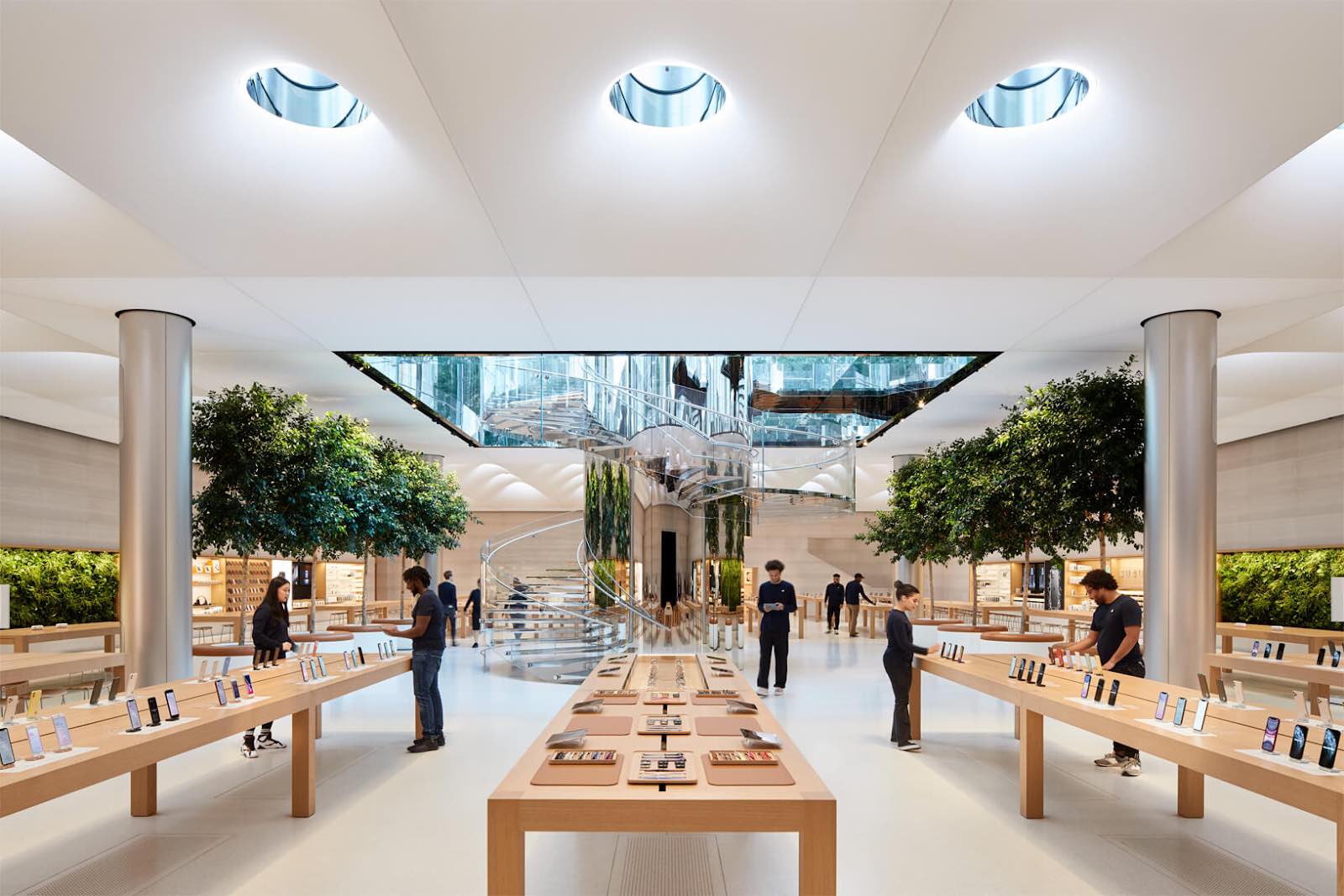
Remember to give your customers the ability to touch, feel, and test whatever you sell.
Perhaps the most widely known example of a retailer that leverages touch is Apple. Each of their products are featured on an open display and ready to be used by customers. This helps customers foster a sense of ownership over the product they’re using and increases the probability that they’ll buy it. Experience-driven retail environments such as these are powerful—even when you’re not hosting an event.
Smell
Do you know about scent marketing? Global megabrands like Sony, Verizon, Abercrombie & Fitch, and Samsung have used it to their advantage with great results. Scents are quickly transmitted to the amygdala, the part of the brain that controls both emotions and memory. If someone smells something they like, it’s automatically registered as a positive memory that makes them feel good. It’s a great way to conjure wonderful memories, strengthen long-term customer loyalty, and enhance brand perception.
Taste
In his book Influence: The Psychology of Persuasion, Robert B. Cialdini, Ph.D., showcases research that demonstrates the power of giving something away for free. Whether they realize it or not, those on the receiving end feel a need to reciprocate, usually by buying the product. The Olive Oil Dispensary (TOOD) in Burlington excels in offering tasty samples to their customers in an engaging way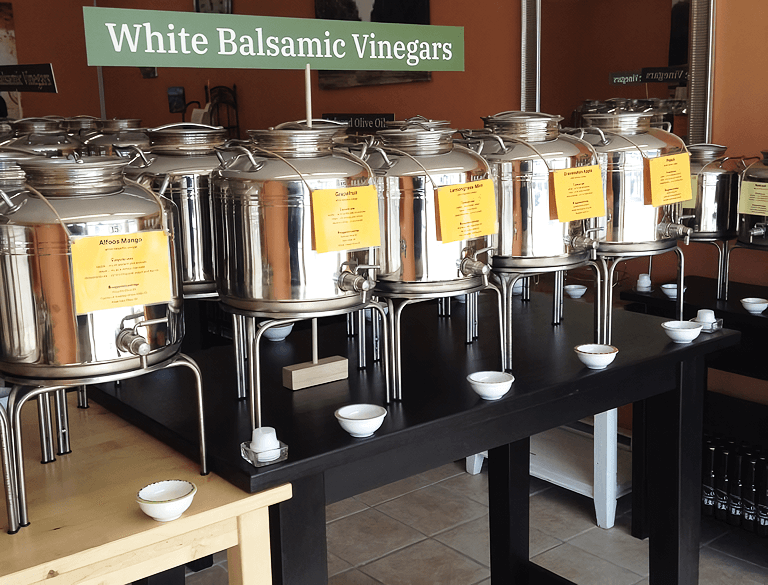
Sight
From using colors for their psychological triggers to using lighting, balance, symmetry and contrast, merchandisers need to control where and what a customer looks at in-store.
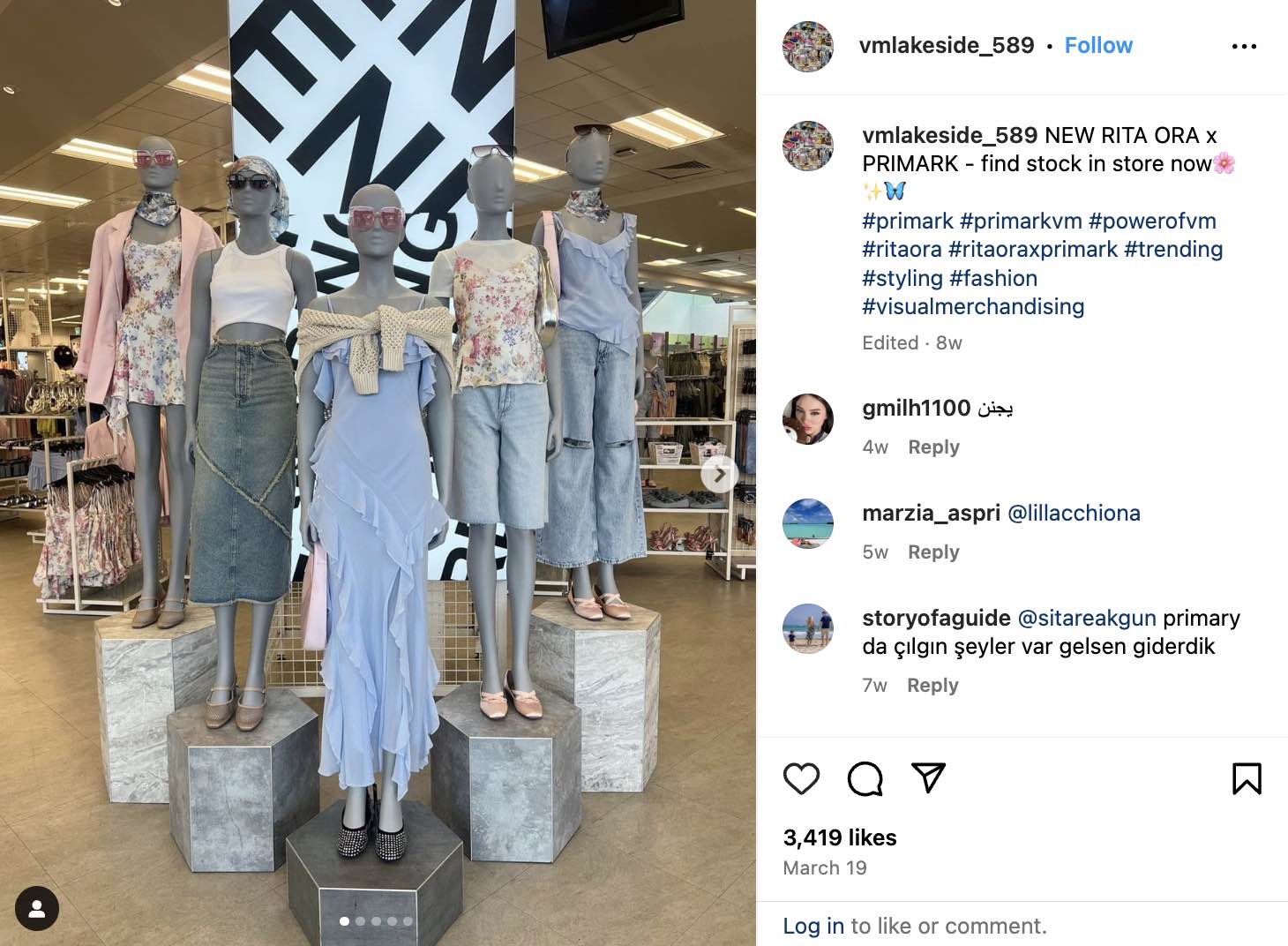
This spring-themed Primark display does a great job at combining various visual elements—color, shape, texture, height, etc.—to create a cohesive display. The retailer uses different pedestals to vary the height of the mannequins, but it maintains balance by evenly spacing the mannequins for a consistent visual flow.
As for the colors, Primark incorporates a great combination of soft hues of blues, pinks, and neutrals.
(Source)
Use design theory to build your displays
Your displays are a critical part of your overall design and can easily make or break the flow of your store. Understanding some key design theory will help you build displays that are eye-catching and go with your in-store design. In general, less is more. When you’re living in a sales-per-square-foot kind of world, this might sound counterintuitive. After all, your retail sales per square footage affect your store’s revenue. But if your store is messy or crowded, you’ll repel customers.
When building your displays, keep these four design theories in mind:
Balance
Balance is key in guiding your customers around your store and providing a cohesive experience—and it can be symmetrical or asymmetrical.
Symmetrical balance uses design elements that have the same weight, while asymmetrical uses items of different weights. While symmetrical displays can add consistency and order, sometimes asymmetrical designs can offer a more interesting touch to your display. 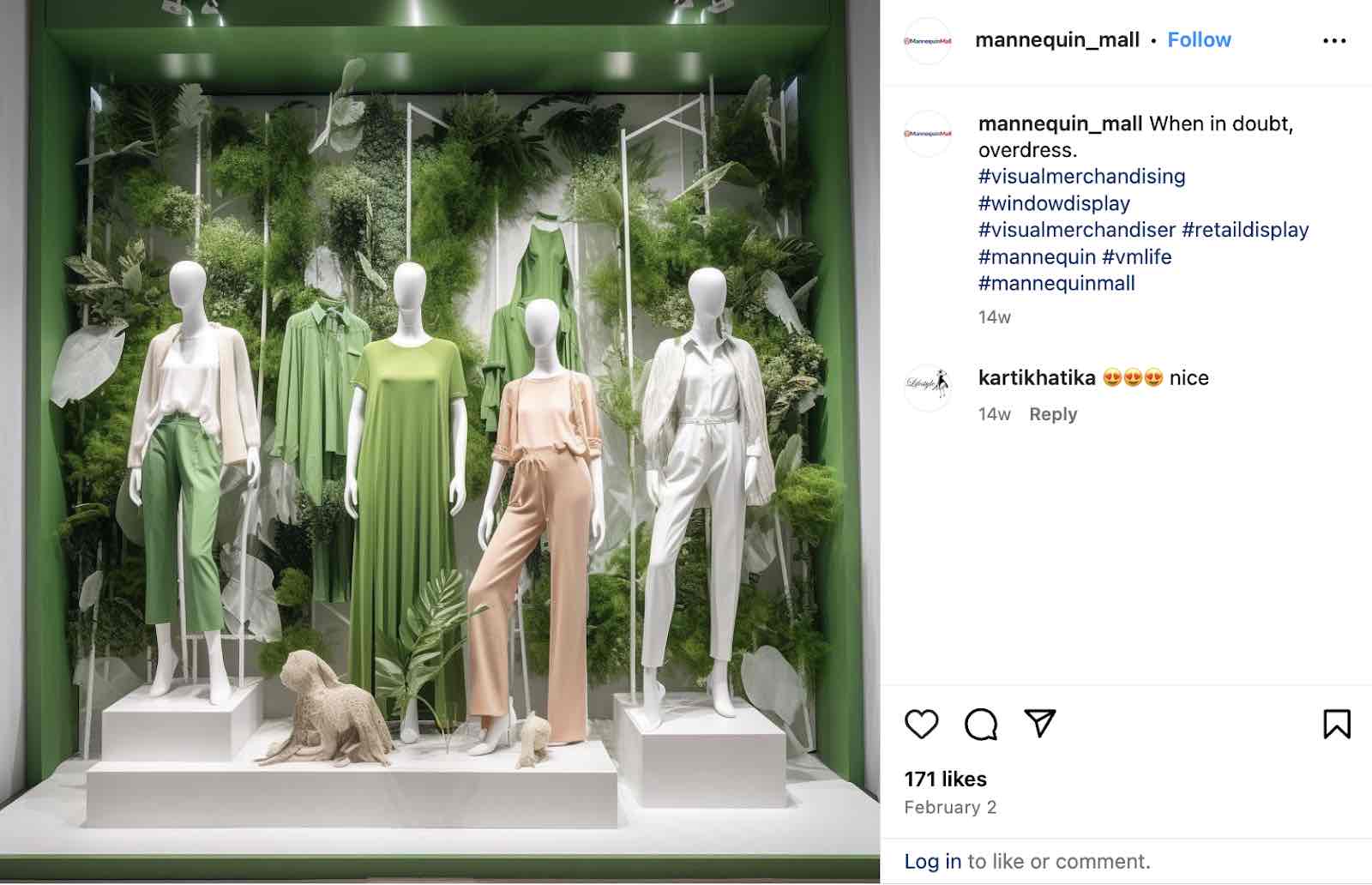
(Source)
Contrast
Contrast can help you emphasize items or displays within your store. Ultimately, you don’t want your customers to get lost in a sea of products. Maintaining a focal point within your displays will help guide customers’ eyes to certain products or sections. Certain color schemes can help. Use black and white, monochromatic colors, or other contrasting colors to add a pop to your displays.
Check out this display from Mango, which uses contrasting colors of green, blue, yellow, and orange to create visual interest and draw attention to key items.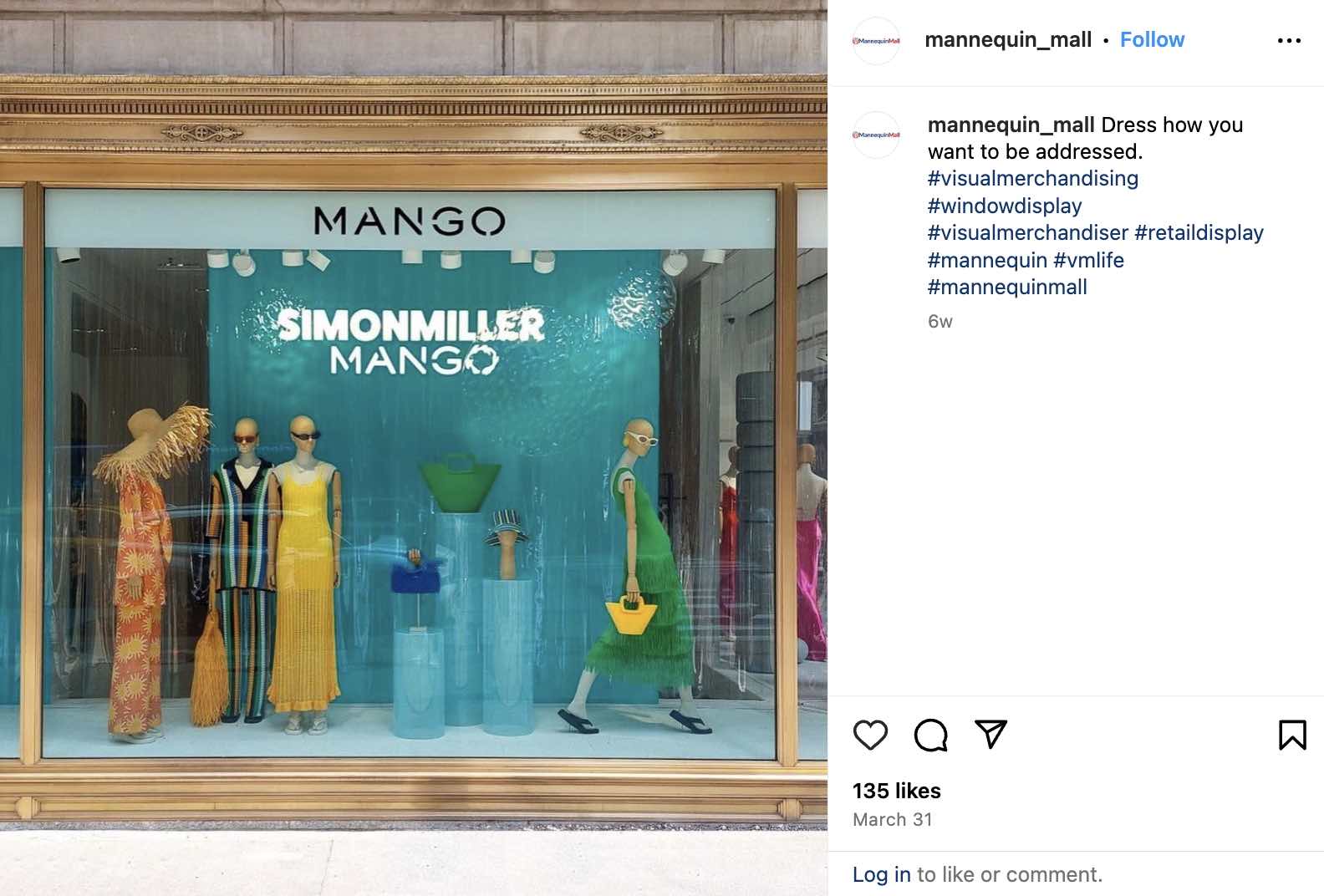
(Source)
White space
Not every corner or space in your store needs to be filled with displays or products. White space, also known as negative space, is an important component of your store design. White space can ultimately help highlight certain displays or products, adding a focal point and reducing clutter. When used correctly, it gives your products room to breathe. Apply this design principle to your store windows, at your point of sale, and throughout your location.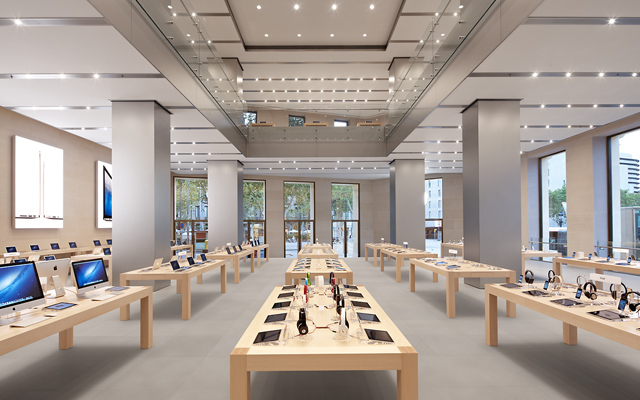
Retail giants like Apple have mastered the art of creating in-store experiences, so much so that their stores are instantly recognizable around the world. Apple is also well known for their use of white space. Their minimalist and modern in-store displays are beautifully simple, with the purpose of keeping products center stage, and allowing customers to use them without creating clutter.
The other side of the spectrum is also true. Most smaller-format stores would do best to avoid too much white space; high-impact displays can bring stores with smaller footprints to life.
Unity
Create unity amongst your in-store displays, decorations, and design to make your store’s aesthetic come together visually for your clients. Cohesion is key. Make sure all the design elements you use make sense with your overall brand. You might find great props or accessories, but the most important thing to keep in mind is whether or not they fit with the story you want to tell; be intentional with your product storytelling. 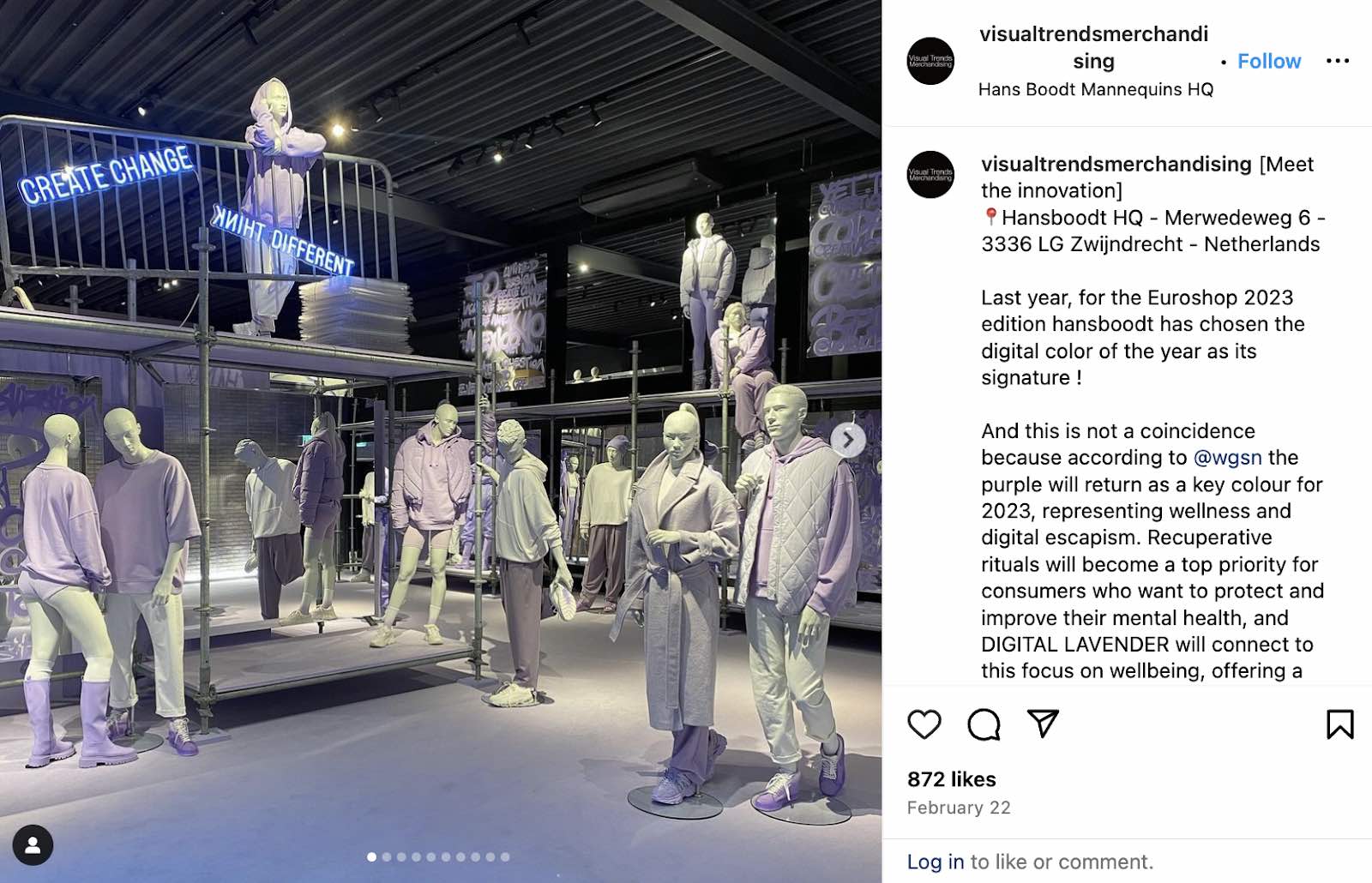
(Source)
Be bold
Create product displays that get customers to react. Think about what might inspire a customer to snap a photo and share it on Instagram, and ultimately buy those items.
However, don’t be bold for bold’s sake. It should make sense for your store and still be presented in a manner that’s designed to drive sales. 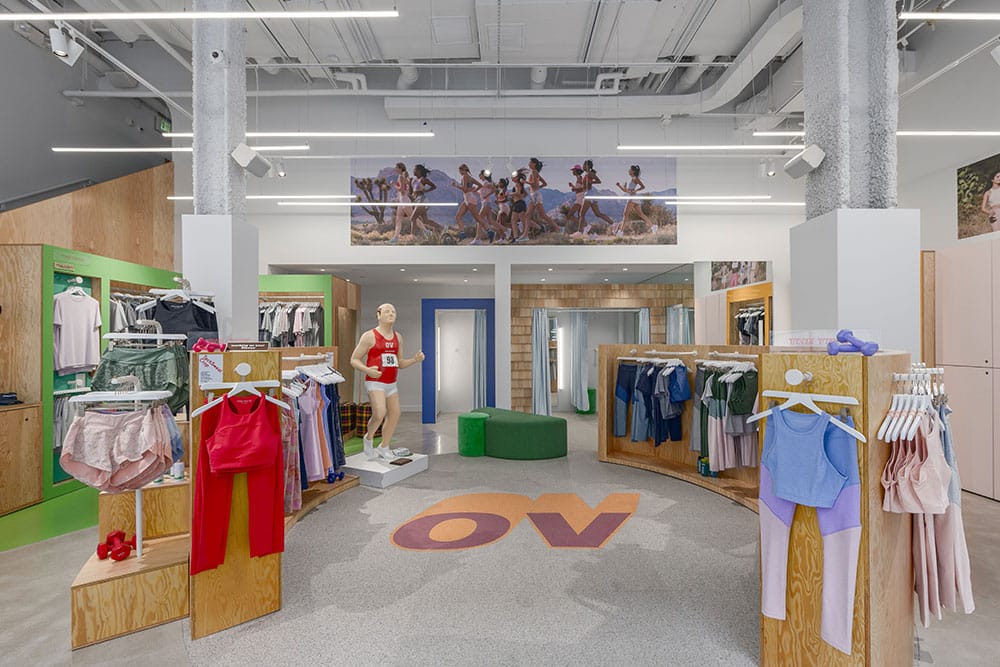
Play off your store’s theme
When it comes to designing your window display, it’s important to remember that your window is only one part of your overall store design; make sure it matches your store’s overall decor, style, and branding.
Take this visual merchandising example from New York-based retailer and cafe, Saturdays NYC. Their name says it all: they sell apparel that’s inspired by surf culture (and surfboards). Their store in Melbourne, Australia puts what makes them unique on full display. 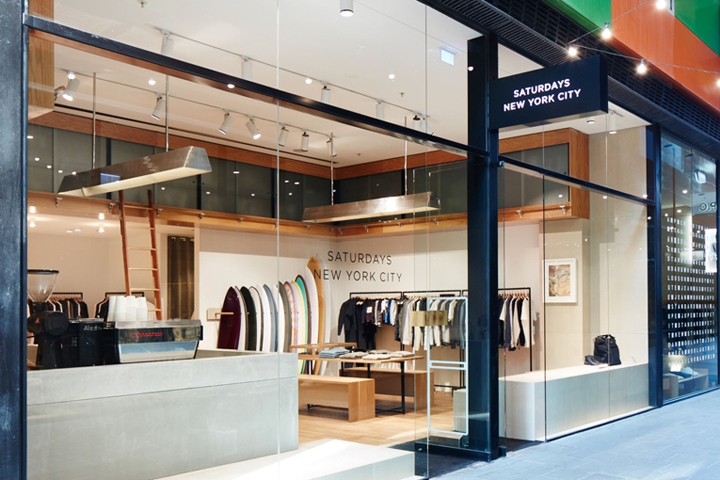
Guide customers through your store
IKEA has become a worldwide example of using visual merchandising to guide customers through their stores. Their maze-like concept groups products by living space and takes buyers through a journey.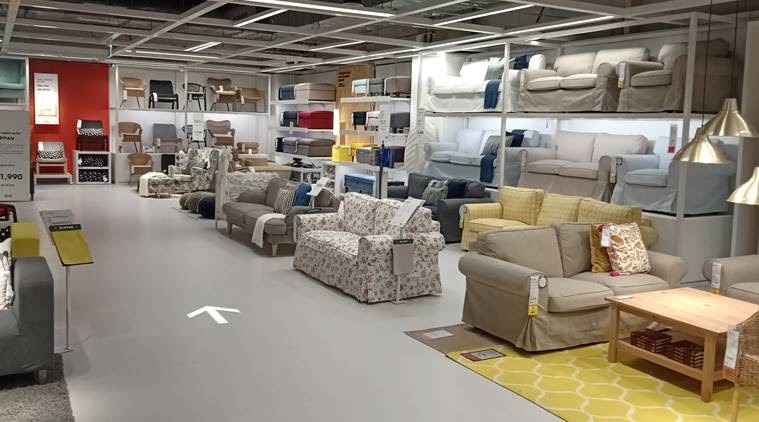
Have you ever gone to IKEA and left the store with more products than planned? Their path-like concept means you can’t really see what’s coming next, instilling a need to stay on course, picking up more items along the way. This ultimately generates a sense of ownership over the products, decreasing the chances that you’ll put them down before you get to the cash wrap.
While you might not have the same space or concept as IKEA, the same rules apply. Group products that share a similar theme to make your store easier to navigate and to encourage shoppers to browse by category and find add-on purchases along the way.
Add interesting signage
Creative signage can help you clearly group and departmentalize your products, tell customers how they’re made, display promotions, and more. Just look at how Allbirds uses in-store signage to clearly share shoe categories with customers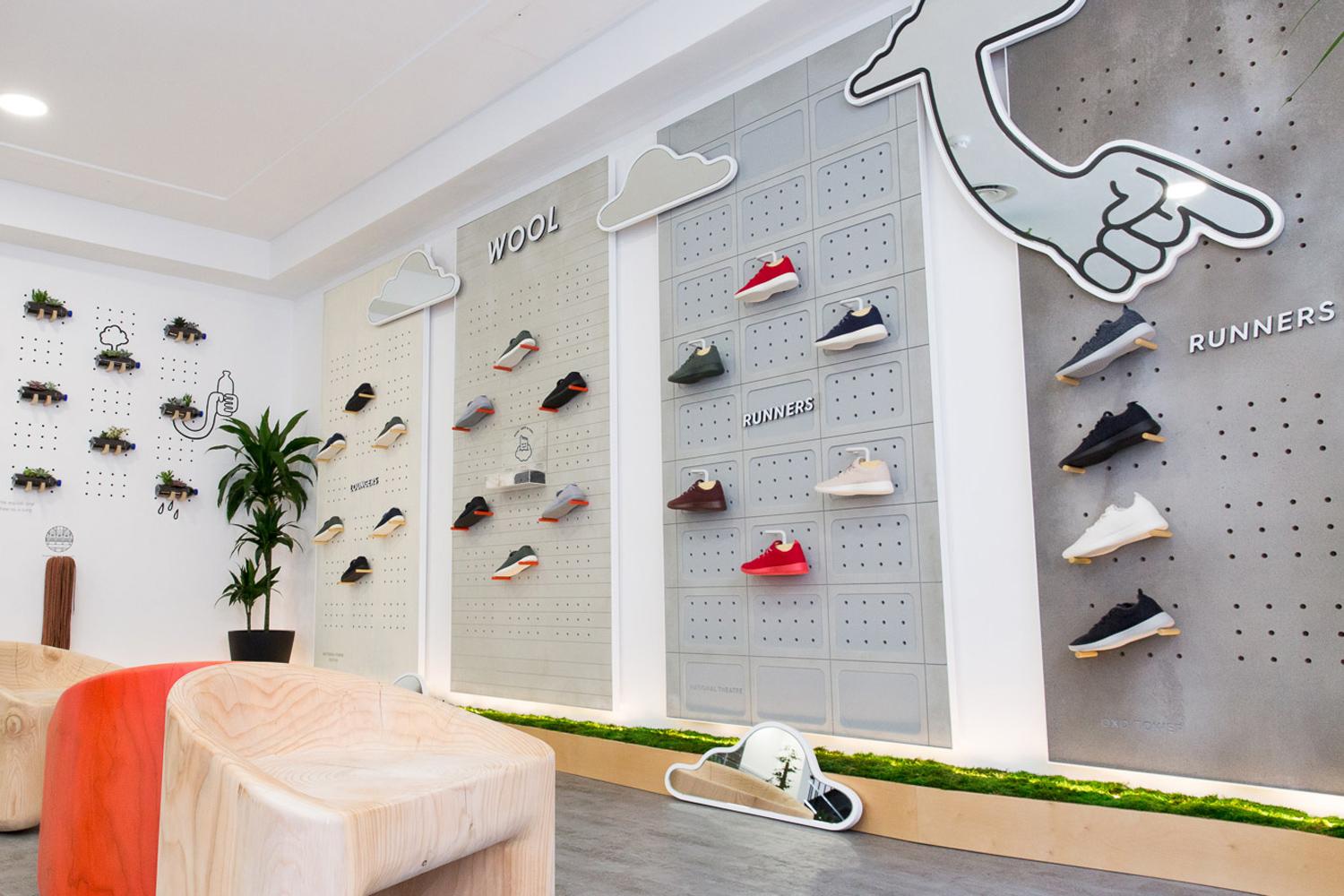
Group products that are commonly bought together
Use your displays to cross-sell products. When you use a point of sale that has reporting capabilities, you can easily find data about what products to cross-sell and how to arrange your displays.
Cross-merchandising is a great way to increase your customers’ average basket size. By conveniently placing products that go well together, you make their shopping journey much easier, and give them ideas they might not have thought of before.
If you own an apparel shop, make sure you keep outfit elements that are displayed on mannequins within close range to make it as easy as possible for customers. You can also use signage to provide inspiration for styling and accessories.
Display complementary products from different categories together to encourage customers to buy more. Picture hats and visors with hiking gear, hair accessories, shoes, and jewelry with party and occasionwear, cosmetics bags and travel-sized beauty and wellness products with trendy luggage, and more.
Check out this merchandising strategy from Target, which showcases baby sunblock alongside swim diapers. Target understands that customers buying swim diapers will likely also need sunblock, so their visual team strategically placed these products together.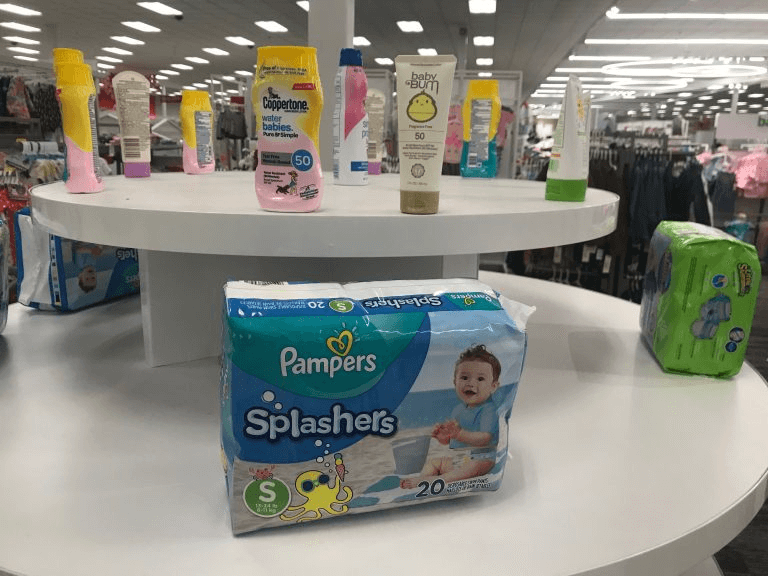
Routinely refresh your product displays
Your store’s design isn’t meant to stay the same. Every time you have new, noteworthy inventory or transition from one season to another, consider refreshing your store’s merchandising, displays, layout, and signage.
Bob Phibbs, one of the world’s leading experts in brick-and-mortar retail, suggests that merchants update their product displays on a monthly basis.
Times change and so do your customers. Refresh your merchandising to maintain relevance. When you create your store design, opt for something you can adapt over time. You can also use seasonal window displays to align your brand with ongoing cultural and seasonal moments, and to draw customers into your store.
Budget design ideas
There are, of course, a million ways to improve your store design, but we don’t all have the funds required for an expensive overhaul. Here are six strategic ideas to help you spruce up your retail space without blowing your budget.
Do a deep clean
Half of shoppers have avoided a business because it looked dirty from the outside. This doesn’t just mean you need to get your front windows washed, although that should be at least a biweekly habit. It means digging deep and cleaning less visible areas like restrooms and beneath equipment.
Explore nontraditional merchandise displays
Shake up the ways in which you showcase your wares with nontraditional shelving options. Think oak rum barrels, clothes displayed around an old bicycle, or second-hand shelves.
Remember, 25% of all small businesses fail within their first year. The upside to this is that there are plenty of retail fixtures and paraphernalia circulating at any time. Think creatively about how you can use those materials to suit your merchandising needs. Even if they don’t seem perfect initially, it’s amazing what a bit of ingenuity can do.
Create simple speed bumps
In retail, speed bumps are designed to do exactly what they do on the road: slow you down. Small tables and sales racks make great speed bumps. Create a theme with each rack and rotate product regularly to keep loyal shoppers engaged.
Design a power wall
A power wall is a display organized to showcase popular products that you want customers to associate with your brand. Think Old Navy’s jeans display, or a tea store’s wall of loose leaf tea tins.
An effective power wall, traditionally placed to a customer’s immediate right, commands attention. Display your featured inventory here, like your most popular items or latest styles. Try to source eco-conscious displays and fixtures when possible. With sustainability becoming a growing concern among consumers, highlighting green practices will resonate with environmentally-conscious consumers while also reducing your carbon footprint.
Be intentional with product groupings
Product grouping is another powerful visual merchandising strategy. In a home goods store, for example, placement can directly impact sales. Instead of displaying all candles in one section and picture frames in another, create a complete scene. Style a table with a tablecloth, candles, glassware, and complementary decor. Thoughtful merchandising helps customers visualize products in their own homes and increases the likelihood of purchase.
Lightspeed customer Squash Blossom is a great example of a boutique that thrives via intentional curation and distinctive visual merchandising.
Understand your target customer’s psychographics
Understanding your target customer is the first step to creating effective visual merchandising and product displays. And we don’t just mean understanding demographic data like their age, income, and education. Dig deeper into psychographic information to get to know what drives their decisions and the types of lifestyles they live.
When you have excellent store data at your fingertips, leverage it to make well-informed merchandising decisions. Use your point-of-sale system to explore your customer data, especially order history.
Pro tip: you can easily do this with Lightspeed Retail’s Sales reports which enable you to filter the data by customer. Drill down on the items you sold, product returns, revenue, and more. 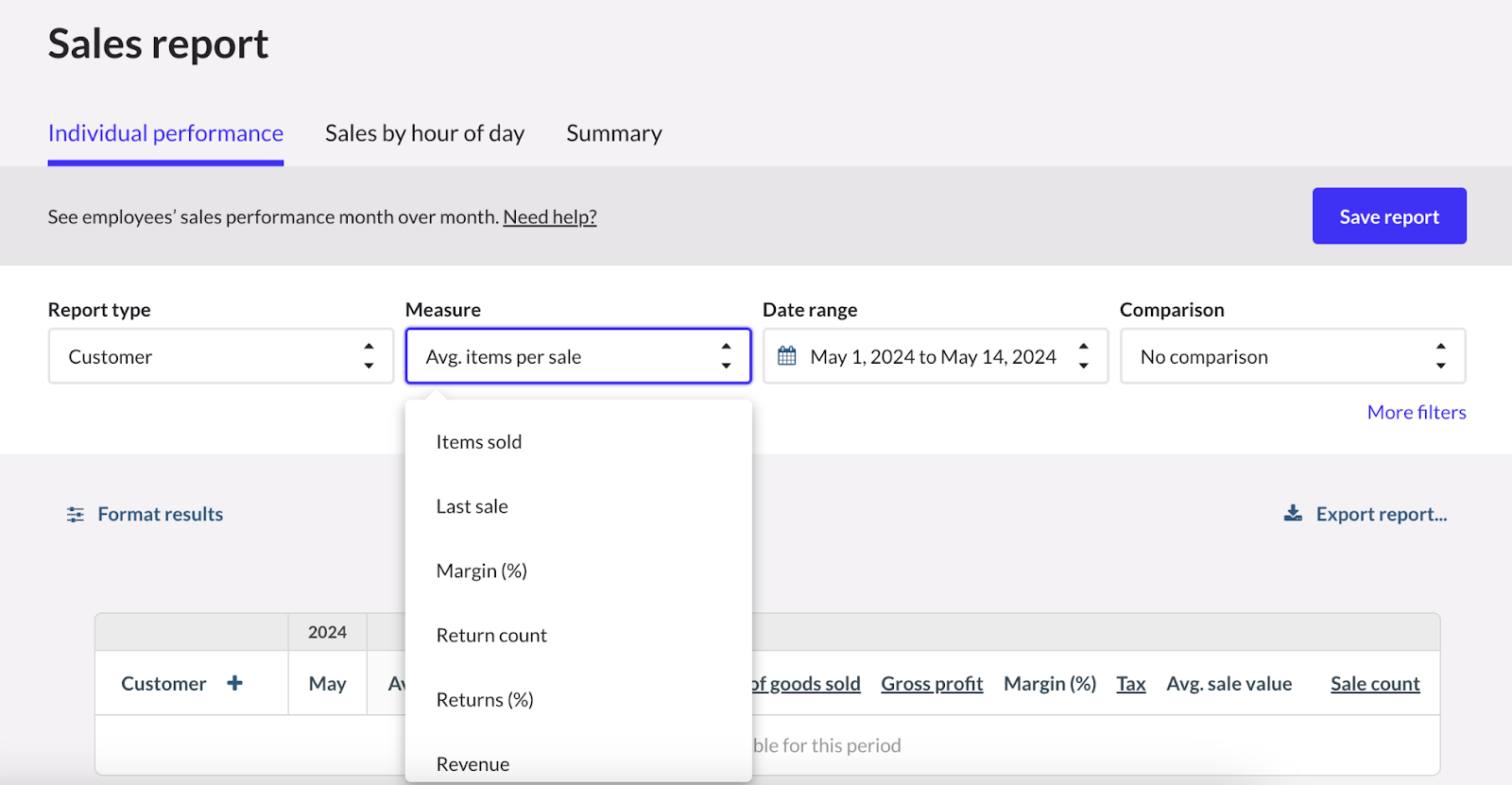
Get inspired
Sources of merchandising inspiration are nearly endless online. Before you start building your displays, try skimming these resources for storefronts that have created eye-catching product displays of their own:
For example, searching “visual merchandising” on Instagram will show you accounts and posts dedicated to retail visual merchandising displays. You’re bound to get ideas as you scroll through the content.
What is a visual merchandiser?
Many small business operators and managers are happy to wear the visual merchandiser’s hat. It’s not uncommon for local retail store owners to create their own display windows and store layouts.
However, there is also a case for hiring a team member who is solely focused on visual merchandising. This is particularly true if you don’t have the necessary knowledge or if you’re running multiple locations and need a cohesive strategy.
This is where a visual merchandiser comes in. This individual can be a full-time employee or a contract worker who’s responsible for:
- Defining the visual merchandising strategy of the retail business
- Ensuring the store’s strategy is brought to life through compelling store layouts, window displays, interior design, etc.
- Monitor visual merchandising costs and ensure that campaigns and initiatives are carried out within the allocated budget
- Measure the results of all visual merchandising efforts and gather data for continuous improvement
Should you hire a visual merchandiser or go the DIY route?
Bringing a visual merchandiser on board is a big decision, and the right answer depends on a number of factors, including your team’s capabilities, the size of your business and your budget.
Generally speaking it may be a good idea to hire a visual merchandiser if:
- You and your team have limited expertise. Your visual merchandising initiatives will be more successful if they’re carried out by someone who has the necessary knowledge and experience. If you’re new to visual merchandising or don’t have a knack for it, you may be better off hiring or outsourcing the job to someone with a deeper understanding of the field.
- You need to free up time and bandwidth to focus on other areas of the business. Visual merchandising can be time-consuming. If you and your team are struggling to manage the many moving parts of the business, then consider bringing in someone who can focus on your merchandising efforts.
- You have the budget to hire a visual merchandiser. Run the numbers to determine whether or not it makes financial sense to hire a visual merchandiser (whether on a full-time, part-time, or contract basis). The exact figures around compensation will depend on where you’re located, thoughaccording to the career website Glassdoor.com, the average pay for visual merchandisers in the United States is $40,605 per year.
Investing in training empowers staff to understand and implement visual merchandising strategies effectively. Regular workshops can provide them with the tools and insights they need to continually improve in-store displays.
The best visual merchandising is unique to your brand
At the end of the day, your store’s look will depend entirely on your products and your brand and how you want to connect with customers. Take the time to understand your brand and translate that into your in-store design. Ultimately, you need to create the design that’s right for you.
While brick & mortar stores focus on tactile experiences, online visual merchandising emphasizes high-quality imagery, interactive 3D models, and virtual try-ons. Simplify the browsing experience, utilize detailed product shots, and ensure a seamless mobile experience for online shoppers.
What’s new: Latest trends in digital visual merchandising
Leverage retail media networks
A retail media network is an ad platform owned by retailers and used to promote the brands they carry. It can be a win-win tool that helps generate revenue while giving your brands greater visibility. Keeping track of which brands perform well in each ad space is a great way to optimize your visual displays, helping you grow as a retailer alongside your partner brands.
Artificial Intelligence
AI capabilities can give you a leg up when it comes to understanding which visual merchandising strategies work best for your business. From staying on top of trends to avoiding stockouts and monitoring best sellers, AI-driven reporting tools can make a big difference when planning your merchandising both online and in store.
Want to learn more about how your point of sale can impact your store’s design? Let’s chat.
Visual merchandising FAQs
What is visual merchandising?
Visual merchandising is the practice of designing and displaying retail products in a way that maximizes sales and enhances the customer experience. It involves using color, lighting, space, and arrangement to create appealing and effective displays.
What does a visual merchandiser do?
A visual merchandiser designs and implements in-store displays and layouts to attract customers and encourage purchases. Their responsibilities include creating eye-catching window displays, arranging products strategically, and ensuring the store’s visual standards are maintained.
What is an example of visual merchandising?
An example of visual merchandising is a clothing store’s window display featuring mannequins dressed in the latest fashion trends, complemented by themed props and coordinated lighting to draw attention and entice customers into the store.
PS: Check out the images and tips above for real life examples of visual merchandising in retail!
What skills does a visual merchandiser need?
A visual merchandiser needs a keen eye for design, creativity, and an understanding of color theory and spatial arrangements. They should also possess strong attention to detail, good communication skills, and the ability to analyze sales data to inform display strategies.
Does visual merchandising fall under marketing?
Yes, visual merchandising falls under marketing. It is a key aspect of retail marketing that focuses on the visual presentation of products to enhance the shopping experience and drive sales.
Is visual merchandising difficult?
Visual merchandising can be challenging as it requires a blend of creativity and strategic thinking. It involves understanding consumer behavior, staying current with design trends, and continually adapting displays to optimize sales and align with marketing goals.

News you care about. Tips you can use.
Everything your business needs to grow, delivered straight to your inbox.