
According to the Lightspeed State of the Retail Industry Report 2026, 55% of New Zealand consumers say cost-of-living pressure influences how they spend.
Which makes sense.
When household budgets tighten, priorities change. The standard option becomes the premium option. The discounted option becomes the standard option. And the premium option suddenly starts feeling like a luxury.
Logic suggests local retailers should be the first casualty.
After all, if price is the biggest factor shaping spending decisions, wouldn’t shoppers simply gravitate towards the cheapest option available?
Not quite.
Despite ongoing cost pressures, 43% of Kiwi consumers say shopping at a local business influences their spending decisions. That’s higher than sustainability concerns, convenience and brand values.
In other words, price may be shaping how New Zealanders spend, but it isn’t entirely deciding where they spend it.
The relationship between Kiwi shoppers and local retail appears to be more complicated than that.
Let’s dive in.
- Let’s talk about geography
- If price matters so much, why does local still matter?
- The local loyalty divide
- The generation caught in the middle
- What this means for retailers
- The shop local cheat sheet
Want to learn more about how New Zealanders shop in 2026?
Download the full Lightspeed State of the Retail Industry Report 2026 today for free
Let’s talk about geography
When people talk about supporting local businesses, it’s easy to imagine they’re talking about proximity.
The bakery on the corner. The boutique on the main street. The family-owned store where the proprietor still greets you by name and asks how your weekend was.
Those things certainly matter.
But local shopping has become a shorthand for something much bigger. It invokes feelings around trust, quality, community, identity.
When people talk about shopping locally, they’re often alluding to what a purchase says about a consumer’s values and priorities, and the data reflects this shift.
According to the Lightspeed State of the Retail Industry Report 2026, local sourcing ranks as the second most important sustainability factor influencing where New Zealanders choose to shop, with 41% of consumers saying it matters to them.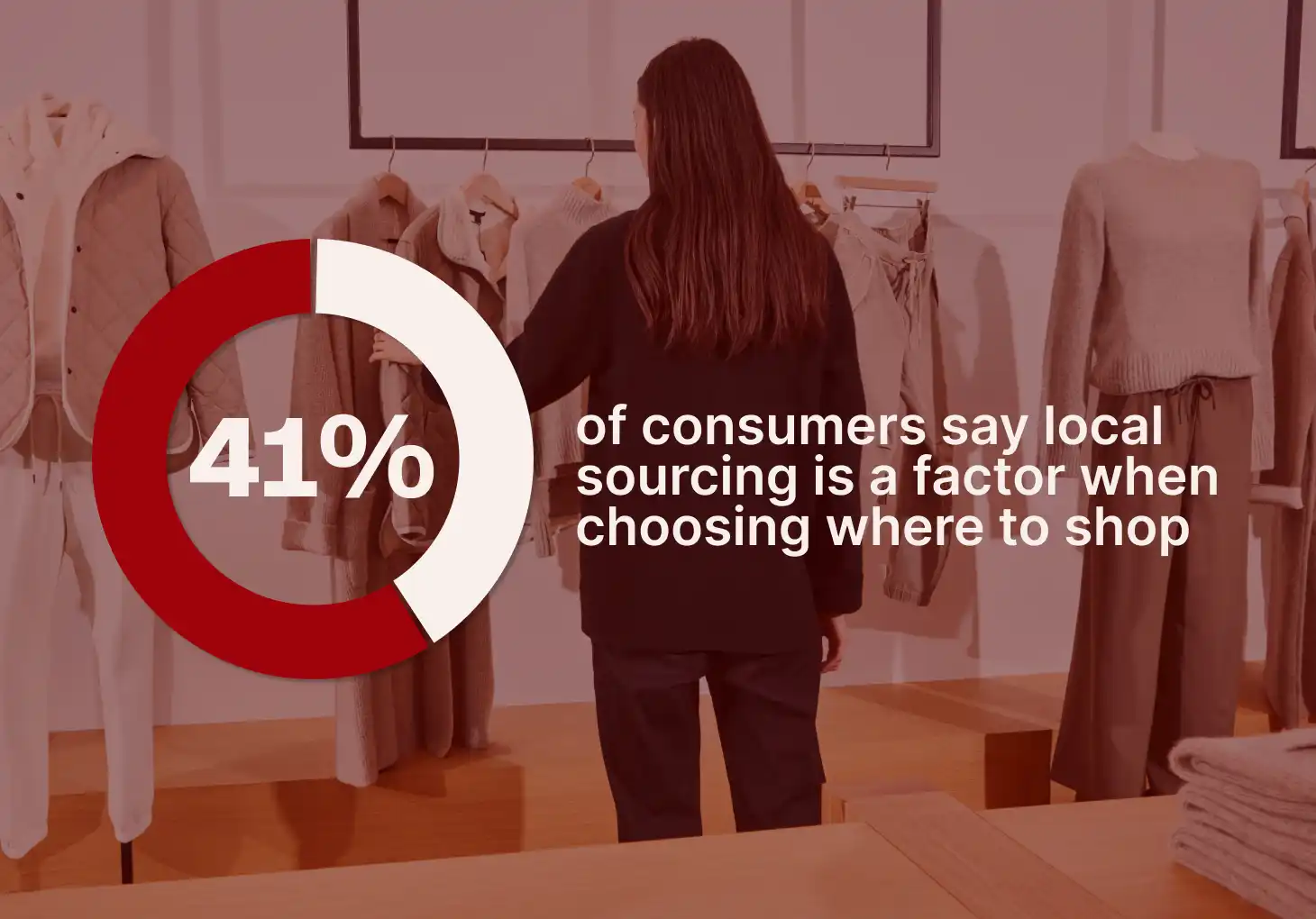
That suggests local shopping is becoming less sentimental and more intentional.
Consumers aren’t simply supporting local because they feel they should. Increasingly, they’re viewing local businesses as part of a broader decision about responsible consumption, transparency and community impact.
If price matters so much, why does local still matter?
This is where things get interesting.
As highlighted earlier, cost-of-living pressure remains the single biggest force shaping consumer behaviour. More than half of New Zealanders say it influences how they spend, and retailers are feeling that reality every day.
Customers are comparing prices more carefully. They’re researching purchases before committing. They’re looking harder at value.
Yet local businesses continue to hold significant influence over purchasing decisions.
The reason may be that consumers don’t necessarily see price and local loyalty as opposing forces.
Instead, they’re weighing multiple forms of value at the same time.
Price is but one form of value.
Human beings have always been remarkably capable of holding contradictory beliefs at the same time. We can promise ourselves we’re cutting back on spending while showing zero will power once the saved items in your ASOS cart go on sale. We can champion local businesses and still spend half of the weekly food budget on stuff from Temu (no judgement here—I too have been seduced by the Temu Spinning Wheel of Dreams).
What I’m saying is decisions are rarely as rational as economists would like them to be.
And that’s good news for local retailers because in a world of cheap imports, we can compete on more than price alone.
The local loyalty divide
While support for local businesses remains strong overall, the Lightspeed State of the Retail Industry Report 2026 reveals an interesting generational split in how that support shows up.
Baby Boomers are the strongest supporters of local shopping in person, with 48% saying they prefer to shop at local stores.
For younger generations, however, local loyalty increasingly lives online.
Thirty-nine percent of Gen X shoppers and 38% of Millennials say they are most likely to support local businesses through online shopping.
This is an important distinction.
For decades, “shop local” was closely tied to physical presence. Supporting local businesses meant visiting them.
Today, local can be digital.
A customer might browse a local retailer’s website from the couch, purchase through social media, or discover a local brand through an online marketplace. The transaction happens online, but the sentiment remains local.
The challenge for retailers is recognising that this local identity alone is no longer enough.
Customers increasingly expect the same convenience, visibility and ease of purchase they receive elsewhere.
Being local may get you onto the consideration list, but the experience still needs to do the rest.
The generation caught in the middle
Millennials present perhaps the most fascinating contradiction in the data.
They are among the most likely generations to support local businesses online, but they’re also the most likely to shop through overseas budget platforms.
In fact, the Lightspeed State of the Retail Industry Report 2026 tells us that overseas budget platforms are now preferred by 32% of New Zealand consumers overall, and that rises to 40% among Millennials.
At first glance, those two findings seem completely incompatible.
But they probably aren’t.
Rather than choosing between local and global, younger consumers appear to be choosing between different value propositions, but it all ties back to that ever-shifting definition of what local truly means.
The same person might purchase everyday essentials from an overseas marketplace while turning to local retailers for products where quality, expertise, service or trust matter more.
This means retailers shouldn’t assume customers have abandoned local businesses whenever they make purchases elsewhere.
Instead, the question becomes:
What makes your business worth choosing?
What this means for retailers
The takeaway from the data isn’t that local automatically wins. Nor is it that price wins.
It’s that that local tag still carries genuine equity, even during a cost-of-living crisis and that the challenge ahead is turning that equity into relevance.
For retailers, that could mean:
- Highlighting local sourcing and community connections more clearly
- Making it easier for customers to shop online
- Communicating value beyond price alone
- Understanding that different generations express local loyalty differently
- Creating experiences that justify choosing local when cheaper alternatives exist
And therein lies an opportunity.
We’re never going to be able to compete with every overseas marketplace or former-online-bookstore-turned-global-retail-overlord on price. That is a fight we won’t win.
But we can compete on the things those marketplaces often struggle to replicate: trust, expertise, community and connection, and it’s the retailers that play to these strengths that will come out swinging on the other side.
Lightspeed State of the New Zealand Retail Industry Report 2026
The Lightspeed State of the Retail Industry Report 2026 explores how consumer expectations are changing. Download the full report to discover the trends shaping retail in the year ahead.
The shop local cheat sheet
Are Kiwi consumers still shopping local during the cost-of-living crisis?
Yes. Despite 55% of consumers saying cost-of-living pressure influences how they spend, 43% still say shopping at a local business influences their purchasing decisions. While price remains the biggest factor shaping spending, local businesses continue to hold significant influence over where consumers choose to shop.
Which generation is most likely to support local businesses?
Baby Boomers show the strongest preference for shopping local in person, with 48% saying they prefer to shop at local stores. However, support for local businesses remains strong across all generations, even if it takes different forms.
Do younger shoppers still care about local businesses?
They do. According to the report, 39% of Gen X shoppers and 38% of Millennials are most likely to support local businesses online. For younger consumers, local loyalty increasingly happens through websites, social commerce and online storefronts rather than exclusively in-store.
Are overseas budget platforms becoming more popular?
Yes. Overseas budget marketplaces are now preferred by 32% of New Zealand consumers overall, rising to 40% among Millennials. This reflects the growing influence of price-conscious shopping behaviour as consumers look for ways to stretch their budgets further.
How important is local sourcing to consumers?
Very. Local sourcing ranks as the second most influential sustainability factor affecting where consumers choose to shop, with 41% saying it influences their purchasing decisions. This suggests consumers increasingly connect local retail with responsible consumption.

News you care about. Tips you can use.
Everything your business needs to grow, delivered straight to your inbox.