
The first-ever Lightspeed Edge NZ saw retailers, industry leaders and technology teams gather at The Cloud in Auckland for an evening focused on the future of retail in New Zealand.
We heard from some of the country’s most innovative operators on what’s changing, what’s working, and what modern retail businesses need to thrive right now.
And while the conversations covered everything from AI and inventory visibility to customer experience and operational pressure, one theme kept surfacing throughout the night:
Retail isn’t becoming less human. The retailers succeeding right now are finding ways to remove friction so they can focus more on people, experience and connection.
Here’s some of the evening’s key moments and takeaways.
A global event, coming home
Lightspeed Edge has previously been hosted in cities like New York, London and Paris. But bringing the event to New Zealand carried a different kind of significance.
As Jamie Armitage, Senior Director, APAC Retail at Lightspeed, noted in her opening remarks, New Zealand is part of where the Lightspeed journey began.
Many retailers in the room first knew the platform as Vend. Today, while Lightspeed has grown into a global commerce platform, Auckland remains a key part of the company’s product and technology footprint, with local teams continuing to help shape the future of the platform.
That sense of local relevance carried throughout the evening.
Nicole Buisson on why physical retail still matters
In her keynote, Nicole Buisson, Managing Director, International at Lightspeed, grounded the evening in the reality many retailers are currently navigating.
Margins remain tight. Customers are more cautious. Operational pressure hasn’t eased the way many businesses hoped.
But alongside those challenges came an encouraging reminder: physical retail still matters deeply to New Zealand consumers.
According to Lightspeed’s 2026 State of the Retail Industry Report, shared for the first time at the event, 77% of New Zealanders still prefer shopping in-store for discretionary purchases, while 40% say they actively prefer supporting local stores.
At the same time, expectations have shifted.
Customers now expect digital convenience and human connection simultaneously. They want accurate inventory visibility before making the trip. They expect smooth checkout experiences. And they still place enormous value on great customer service.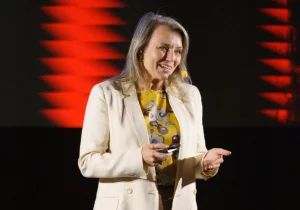
“People don’t want to choose between digital convenience and human connection, because they expect both.”
The research showed that 82% of New Zealanders see customer service as the defining factor in where they shop, while 60% want real-time inventory visibility before visiting a store.
The challenge for retailers isn’t simply attracting customers through the door anymore. It’s delivering an experience that feels seamless once they arrive.
Retail’s new frontier: insights from Kiwi operators
One of the strongest parts of the evening came during the live panel discussion, Navigating Retail’s New Frontier, moderated by Lightspeed Product Manager Ben Henderson.
Featuring Maurice Wells (Electric Bike Team), Chris Benham (The Village Goldsmith & Floeting), Justin Flitter (AI New Zealand) and Beau Jeffries (FallenFront), the discussion explored how retailers are adapting to economic pressure, changing customer expectations and the growing role of technology.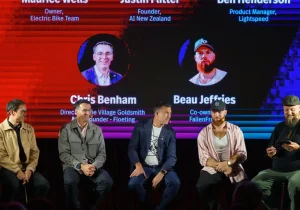
And while each business operates in a very different category, there was surprising alignment in how they viewed the future of retail.
Experience still wins
For Beau Jeffries, co-owner of FallenFront, the in-store experience remains one of the biggest differentiators independent retailers have over larger competitors.
He spoke about designing the store experience intentionally — from staff engagement to physical layout — and avoiding the common trap of treating customers like transactions.
“We try not to treat people like customers. We try and treat them like people who are supporting our cause.”
One of the more memorable moments of the night came as Beau described FallenFront’s approach to customer interaction:
“The counter is lava.”
Rather than standing behind registers waiting for customers to approach, staff are encouraged to stay active on the floor, engage naturally and create memorable interactions throughout the store.
It’s a philosophy that reflects a broader shift many retailers are embracing: operational efficiency matters, but human connection remains the real competitive edge in a world so set on wrestling it from our hands.
Adapting without losing identity
As economic conditions tighten, several panellists discussed the difficult balancing act retailers face between adapting to the market and staying true to their brand identity.
For FallenFront, that meant making hard decisions about what no longer served the business—“Kill your darlings,” as Beau put it.
He spoke candidly about moving the store away from its skate-shop roots in order to broaden its appeal and sharpen its positioning in a competitive retail environment.
Meanwhile, Chris Benham, Director of The Village Goldsmith and Co-founder of Floeting, shared how innovation and premium positioning have helped the business expand globally through its Floating Diamond technology—now sold in more than 50 countries worldwide.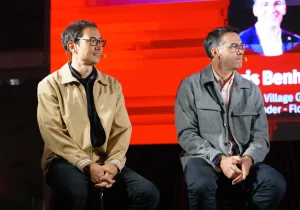
Rather than retreating during difficult economic conditions, the business focused on differentiation, product innovation and strengthening its position in higher-value segments less impacted by short-term consumer caution.
Expectations haven’t changed, but delivering them has.
Electric Bike Team owner Maurice Wells offered one of the night’s more interesting perspectives on customer expectations.
In his view, expectations themselves haven’t fundamentally changed. Customers still want retailers to be knowledgeable, helpful, accurate and easy to deal with.
What has changed is the operational difficulty of delivering that consistently while retailers juggle staffing pressure, rising costs and increasingly complex systems.
That complexity is especially visible online.
Wells criticised the growing trend of retailers advertising products as “in stock” when inventory is actually sitting with suppliers rather than physically available.
For him, inventory accuracy builds trust above all. If retailers are encouraging customers to begin their journey online, the information they provide needs to be reliable.
AI, automation and the next phase of retail
Artificial intelligence naturally became a major topic throughout the evening, but notably, the conversation stayed grounded in practicality rather than hype.
Ann Nguyen, Senior Design Manager at Lightspeed, captured the tone well during the product innovation sessions:
“AI simply cannot replicate your human spark.”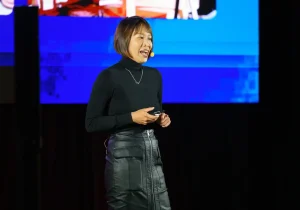
This echoed a focus throughout the night on how AI works best when it’s used to reduce repetitive work, simplify workflows and create more time for the parts of retail that matter most.
As Dan Kim, Group Product Manager at Lightspeed, explained, disconnected systems, manual workflows and operational silos are often what prevent retailers from operating confidently and efficiently.
The goal is about creating systems that feel connected enough to disappear into the background.
The growing importance of discoverability
One of the more future-focused discussions came from Justin Flitter, Founder of AI New Zealand, who explored how AI is beginning to reshape customer discovery and ecommerce.
As generative AI tools increasingly influence how people search, compare and buy products online, retailers may soon face a world where AI platforms sit directly between brands and consumers.
His warning to retailers was clear: if your products or services should appear in AI-driven recommendations, your content and online presence need to be structured in ways that make that possible.
Retailers who fail to show up in those discovery moments risk becoming invisible.
Beyond the stage
While the formal sessions delivered plenty of discussion points, much of the energy continued well beyond the presentations themselves.
Throughout the evening, demo stations remained busy with retailers getting hands-on with new tools and speaking directly with product teams about operational pain points, workflows and opportunities inside their businesses.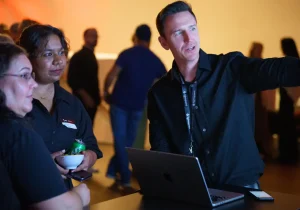
Across The Cloud’s waterfront venue, conversations stretched between sessions and long after the stage content wrapped—a reflection of just how valuable peer-to-peer connection remains inside New Zealand’s retail community.
Looking ahead
If there was one clear takeaway from Lightspeed Edge NZ, it’s that retail in New Zealand continues to evolve, but its foundations remain deeply human.
Stand out retailers aren’t necessarily chasing every new trend, but they are finding ways to protect what matters. Their time, their margins and the customer service that maintains such a strong connection to the communities they serve.

News you care about. Tips you can use.
Everything your business needs to grow, delivered straight to your inbox.