Are your current golf course marketing ideas delivering the results you need or starting to fall flat?
Golf course marketing has become increasingly difficult to manage as the number of potential channels you’re supposed to be leveraging seemingly keeps growing. At the same time, relying on outdated tactics or one-size-fits-all promotions makes it harder to stand out and fill your tee sheet.
The reality is that today’s golfers behave differently. They discover courses via social media, compare options online, expect seamless booking experiences and respond best to personalized, relevant communication. If your strategy hasn’t kept up, you’re likely missing opportunities to attract new players and drive more revenue from your existing customers.
Let’s cover some of the most effective golf course marketing ideas for 2026 and beyond. These strategies are designed to help you connect with modern golfers and turn interest into bookings.
Find the info you need:
- Why is digital-first golf course marketing so important?
- Your website and booking experience
- Branding: Build an identity that helps you stand out
- Social media: Turning engagement into bookings
- Partnerships: Extend your reach
- Email Marketing: Turn your customer list into retention revenue
- SMS Marketing: Reach golfers on their mobile devices
- Google Business Profile: Optimizing online visibility
- Customer Loyalty: Capitalizing on the power of retention
- Lightspeed Digital Services: Collaborate with marketing experts
- Golf course data collection: Marketing shouldn’t be guesswork
Why is digital-first golf course marketing so important?
Consider the various parts of your facility for a moment: the golf course, the practice area, the clubhouse, the pro shop, the restaurant, beverage cart service, non-golf amenities and more.
All of these components work together to create an overall impression of your facility. From the moment a customer arrives on site to the moment they leave, you want every interaction they have with your facility to be positive.
Your course’s online presence works the same way: it is the cumulative total of all online touch points golfers can have with your golf course. These include, but are not limited to:
- Website
- Emails
- Mobile applications
- Static social media posts
- Video social media posts
- Search engine results
- AI overviews
- Online business listings
- Online reviews
- Tee time marketplace listings
- Online display ads
- Third-party reviews and course listings
These key touch points and channels work together to create a holistic impression. The more considered and cohesive your digital golf course marketing ideas are, the more avenues potential customers have to discover your facility, interact with your brand, book rounds and become loyal customers.
Your website and booking experience
Your golf course’s website design is the foundation of all your efforts and nearly all your golf course marketing ideas and tactics will drive users there. Assessing and improving your website can feel daunting, but it’s a critical step toward creating a stronger online presence.
There’s a lot that goes into creating an amazing website, but here are some tactics you should try in 2026 and beyond.
1. Evaluate and refine your booking flow
It’s not the most flashy or trendy item on this list, but it’s arguably the most important. Your website is more than a hub for information, it’s your foundational sales tool. The longer it takes for golfers to book due to slow loading times or poor navigation, the more likely they are to take their tee time elsewhere.
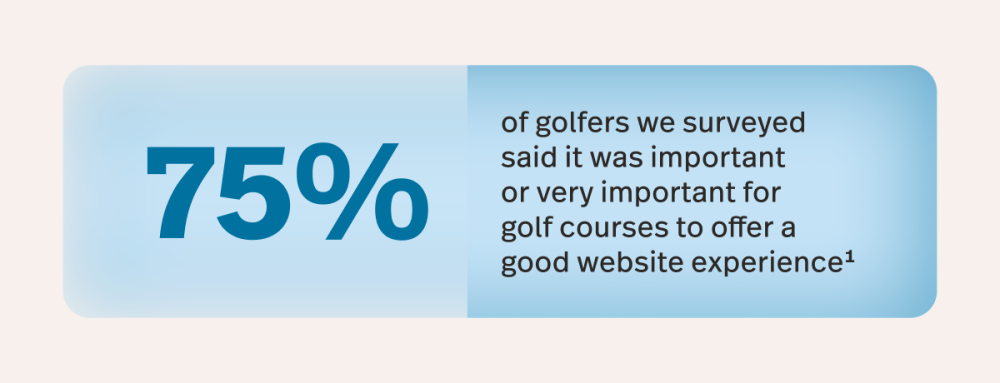
Your job is to guide golfers toward booking as quickly and easily as possible.
That means:
- Featuring high-quality visuals that showcase your course
- Using clear, concise copy that communicates value
- Highlighting key information like pricing, availability and amenities
- Making your “Book a Tee Time” button impossible to miss
Every page on your website should support this goal. If visitors have to search for how to book, you’re creating unnecessary friction and losing potential revenue.
Pro Tip: Leveraging booking software that integrates with Reserve with Google can help you turn Google searches for your facility into tee times in fewer steps.
- Add a “Book” button to your Google Business Profile listing
- Link directly to your booking page and convert search traffic you’ve earned
- Unlock a seamless, convenient tee time booking channel for golfers
- Track and report on Google bookings with Lightspeed’s built-in reporting
Refine your tee time booking flow
Our 24/7, fully customizable online tee time booking widget integrates with your website and makes booking rounds really, really easy.
2. Optimize your website content for AI and search engines
There’s no denying that developments in AI have irreversibly changed online search and digital marketing. And this is true for both businesses and consumers.
Golfers are no longer just typing “golf course near me” into Google and clicking through a list of links. Increasingly, they’re asking more specific, conversational questions in search engines and AI tools. Questions like “What’s the best public golf course near me?” or “Where can I book a tee time this weekend?” are now being answered directly within search results or by AI-powered assistants.
This shift has major implications for how golf courses approach website content.
To stay visible, your website needs to do two things well.
- It needs to rank in traditional search results
- It needs to be structured in a way that AI tools can easily understand, summarize and recommend
That starts with the basics.
Your website should clearly communicate:
- Who you are
- Where you’re located
- What you offer
Key pages like your homepage, tee time booking page, course overview and contact information should be easy to find and optimized with relevant keywords like “golf course near [your city],” “book a tee time,” and “public golf course.”
3. Optimizing for modern search goes beyond keywords
You also need to think about how golfers are searching. Instead of focusing only on short phrases, build content around real questions your customers are asking. This could include:
- What are your course conditions like right now?
- Do you offer beginner-friendly tee times?
- What amenities are available on-site?
- What makes your course unique?
Answering these questions directly on your website not only improves your chances of ranking in search results, it also increases the likelihood that your content will be picked up and surfaced by AI tools.
Content formats matter as well. Well-structured pages with clear headings, concise explanations and easy-to-scan sections perform better than long, unorganized blocks of text. Dedicated pages for events, leagues, lessons and promotions give search engines more context and create more entry points for potential customers.
In many ways, optimizing your website for search and AI is about clarity.
The clearer and more helpful your content is, the easier it is for both search engines and potential customers to understand what you offer and why they should choose your course.
Courses that invest in this approach are easier to find, easier to evaluate, and ultimately easier to book.
4. Add big, bold visuals to capture attention
Remember those drone shots from earlier? Adding them to the front page of your website is an effective way to set the stage for the golfer, draw their interest immediately and show them what to expect once they book. It’s an unmissable opportunity to show off your facility, your routing and the types of experiences you’re capable of creating.
Working with a Digital Services team like the experts at Lightspeed is a fast, effective way to optimize the look and feel of your website. Striking the right balance between functionality, performance and aesthetics is crucial and trusting the process to a team of pros working with battle-tested templates is a surefire way to get it right.
5. Optimize for mobile devices
Generations of customers now almost exclusively rely on their smartphones to engage with brands and businesses. This is no different when it comes to recreational golf.
According to a recent analysis of Lightspeed booking traffic, 84% of all online tee time reservation sessions come from mobile devices.
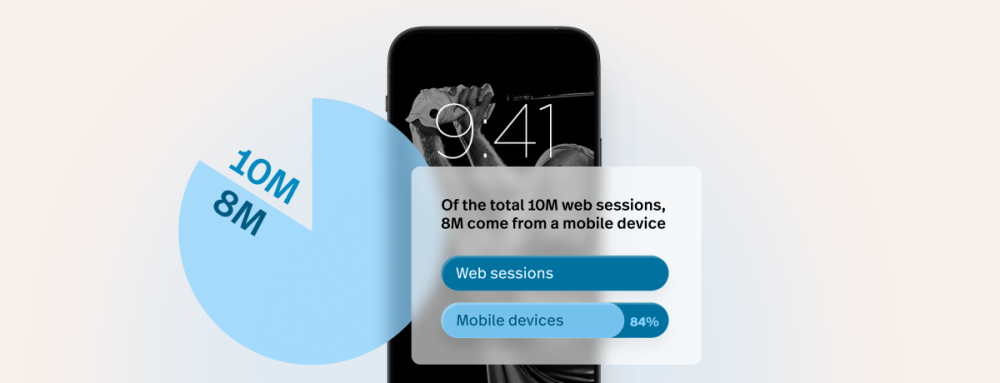
Designing your online experience with mobile browsing in mind is essential to creating a seamless customer experience. It’s not enough to set up your website for desktop and clean, responsive designs are needed to make mobile booking a delightful, easy process.
Website & booking takeaways
If your goal is to get more golfers and increase tee time bookings, your website is one of the most important places to focus.
A fast, mobile-friendly, and easy-to-use booking experience can dramatically improve conversion rates and help you get more value from every marketing effort you run.
In many cases, improving your website isn’t just a design upgrade—it’s a direct investment in your bottom line.
Branding: Build an identity that helps you stand out
Your golf facility’s brand goes beyond your logo, course colors or name.
It’s how golfers perceive your course before they book, arrive and play. It shapes expectations, influences decisions and plays a direct role in whether someone chooses to book with you or go elsewhere.
In a world where golfers are constantly scrolling through social media, browsing websites and comparing options online, leaning into a strong, recognizable, authentic brand is key.
A well-defined brand helps your course:
- Stand out in a crowded local market
- Create a stronger emotional connection with golfers
- Increase perceived value (and willingness to pay)
- Improve the performance of all your marketing efforts
In 2026, golf course branding strategies need to be digital-first and laser focused on driving interest and engagement on mobile devices. From your website and social media presence to emails and ads, you need to be pulling on a common thread across all your digital channels.
Here are a few things you should try.
1. Use video and photography to sell an experience
Golf is a sensory experience, and your marketing should reflect that.
Before golfers book a round, they want to know what your course looks like, what the atmosphere feels like and whether it’s worth their time and money. High-quality visuals of your routing, your clubhouse and your amenities help answer those questions instantly.
To build a strong visual brand, you could produce:
- Drone footage of your course and signature holes
- High-quality photos of key areas (holes, clubhouse, patio, practice facilities)
- Short-form vertical videos for Instagram, TikTok and YouTube Shorts
- Lifestyle content that shows golfers enjoying the full experience
The goal is to show off your course, but also to tease out the experience you offer to help golfers imagine themselves playing, socializing, eating, drinking and enjoying the day.
Hiring professionals not in the budget? Mobile devices are more than capable of producing great content; the key is consistency. Build a library of visuals you can use across your website, social media and marketing campaigns and use them liberally.
2. Define your positioning so your messaging resonates
Creating a strong brand and building a great marketing strategy around it means understanding your facility and building a clear positioning in the market.
This comes down to asking yourself what kind of experience you offer. Are you:
- A premium course with pristine conditions and top-tier service?
- A value-driven public course focused on accessibility and playability?
- A social destination with strong food, beverage and events?
- A family-friendly facility built for casual fun and skills development?
Your answer should shape everything—from the images you use to the language in your marketing to the offers you promote.
For example:
- Premium courses should highlight conditions, amenities and singular experiences
- Public courses should emphasize convenience and value
- Social-focused facilities should showcase events, patios and atmosphere
- Family-friendly facilities should lean into accessibility, flexibility and fun
When your positioning is clear, your marketing becomes more focused and more persuasive to the right golfers.
3. Stay consistent across every touchpoint
The mark of good brands is how they are able to stay consistent across different customer touch points.
Having a great website is fantastic, but if you aren’t backing it up across your other channels, things can feel incomplete and fragmented. Your brand should feel cohesive across:
- Your website and booking experience
- Social media channels
- Email campaigns
- Paid ads
- On-course signage and printed materials
To achieve this, define a few core elements:
- Visual style (clean, premium, casual, bold, etc.)
- Tone of voice (friendly, professional, instructional, playful)
- Key messages (what you want golfers to associate with your course)
In today’s digital-first world, consistency also means ensuring your brand translates well to mobile devices and short-form content.
When everything aligns, your marketing becomes more recognizable, more trustworthy and ultimately more effective at driving bookings.
Branding takeaway
If you’re wondering how to market a golf course more effectively, your brand is a good place to start.
A strong, consistent, and visually compelling brand doesn’t just make your course look better, it makes your marketing efforts more impactful. And in a competitive market, that can be the difference between a full tee sheet and missed revenue opportunities.
Dial in your online presence
From professional website design to tailored digital marketing strategies, Lightspeed's Digital Services team can help you reach more golfers and drive more bookings
Social media: Turning engagement into bookings
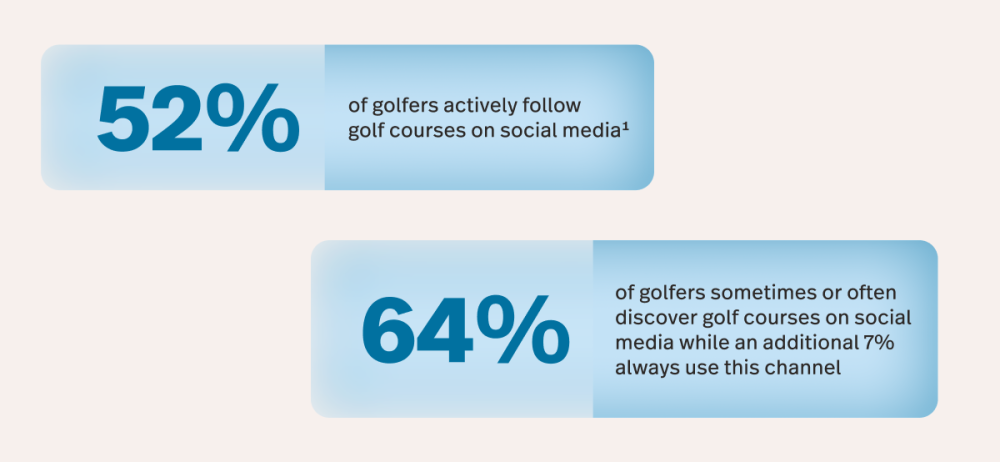
Social media channels like Instagram and Facebook have become indispensable tools for raising awareness and engaging with golfers. According to our survey data, this is especially true among 18-44 year olds.
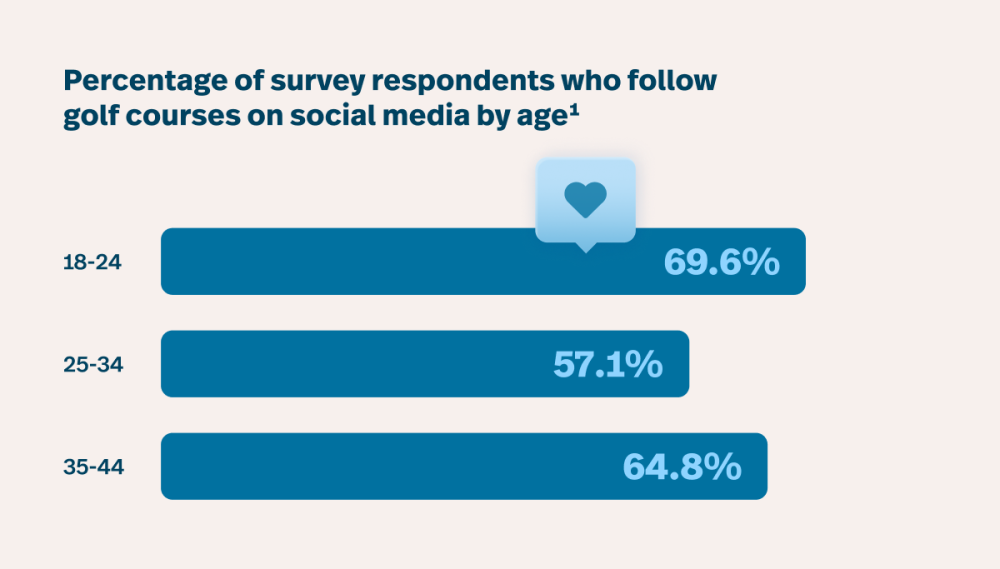
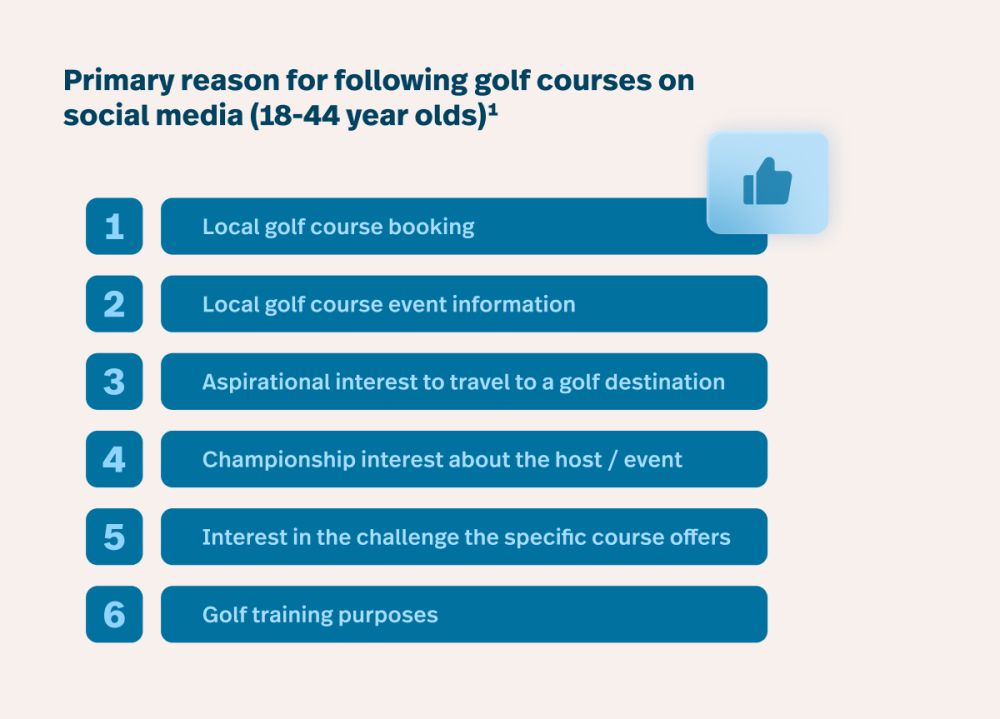
What’s striking is that the most active followers of golf course social accounts do so to access information about courses in their area. This is why it is so essential for golf courses to actively post on their social accounts:
- Establish a posting cadence and stick to it
- Review your profiles regularly to ensure images and info are up to date
- Curate your posts wisely and prioritize quality over quantity
- Mix it up! Don’t post the same content repeatedly
- Run contests requiring users to like, share and comment in order to enter or win
- Update followers on key course info as it changes
- Engage with followers, reshare content and show off your brand personality
It might seem daunting, but the more you actively engage with social media as a viable marketing tool, the more success you’re likely to see.
Let’s dive deeper on a few key tactics.
1. Establish a consistent and intentional posting strategy
Consistency is the foundation of effective social media marketing.
Posting sporadically or only when you have something to promote won’t build momentum. Instead, create a schedule you can realistically maintain—whether that’s three times a week or once a day.
Just as important as frequency is variety.
Mix up your content to keep your audience engaged:
- Course conditions and updates
- Scenic photos and videos
- Promotions and special offers
- Events and tournaments
- Instructional content from your pros
- Behind-the-scenes moments
A well-rounded content strategy keeps your audience interested and gives you more opportunities to connect with different types of golfers.
2. Experiment with short-form video content
Easy to consume, highly shareable and favored by platform algorithms, short-form video can be a great code to crack for your course.
Platforms like Instagram Reels, TikTok and YouTube Shorts are drawing an incredible amount of attention from golfers of all demographics, but especially 18-44 year olds. In fact, over 90% of Gen Z and Millennial users watch short-form videoson these platforms.
For golf courses, this can include:
- Flyovers of holes
- “Tip of the day” from your pro
- Course condition updates
- Event highlights
- Fun, personality-driven content
- Collaborative content with influencers and content creators
You don’t need a full production team to succeed here. Authentic, consistent content often performs better than highly polished videos.
Customer Spotlight: Copetown Woods Golf Club
Barry Forth is the General Manager of Copetown Woods Golf Club, a highly-popular public facility that sits an hour west of Toronto. With over 10K followers on Instagram and excellent online engagement, Barry’s approach to social media reinforces that your facility doesn’t need expensive production or a detailed content calendar to succeed on social media. Timeliness and relevance often outperform highly produced content.
From the Course
Many of Copetown Woods’ most successful posts start as spontaneous ideas. Barry focuses on reacting to what’s happening at the course—or what’s trending online—and putting a Copetown Woods spin on it while the moment is still relevant.
Someone asked me if it’s quality or quantity. I said it’s neither—it’s relevancy over both. Everything I do is one take, shot on my phone. If I mess up, it probably makes the engagement better. It’s just about what’s relevant right now.
3. Run contests and promotions to boost engagement
Social media contests are a simple and effective way to generate interest and grow your audience.
The key is to make participation easy and valuable:
- Like, comment, and share to enter
- Tag friends to increase reach
- Offer relevant prizes (free rounds, merchandise, F&B credits)
These tactics can be especially effective when tied to seasonal campaigns or events.
4. Turn golfers and affiliates into marketers
User-generated content is one of the most powerful forms of marketing available.
When golfers or third-party golf-centric social media accounts share their experiences at your course, it builds trust and encourages others to visit.
Encourage this by:
- Work with golf travel and tourism accounts to promote your facility
- Asking golfers to tag your course or use a hashtag
- Regularly re-post content from your customers
- Offering incentives through loyalty programs
The more your customers share, the more authentic, credible visibility your course gains.
5. Monitor and manage your online reputation
Your social presence goes beyond what you post—it includes what others say about you.
Online reviews on platforms like Google and GolfPass play a major role in influencing decisions. A few negative reviews can turn potential customers away, while strong ratings can drive more bookings.
Make it a habit to:
- Respond to positive reviews with appreciation
- Address negative reviews professionally and constructively
- Use feedback to identify areas for improvement
Managing your reputation is an essential part of modern golf course marketing.
Social media takeaway
Ignore social media’s impact as a revenue driver at your own risk.
These platforms may feel exhausting and oversaturated, but when used effectively, there is no denying that they can help you reach new golfers, engage your audience and increase bookings.
The key is to stay consistent, embrace video, and focus on content that not only gets attention—but drives action.
Partnerships: Extend your reach
For most golf courses, marketing budgets are limited. Strategic partnerships can help you reach new audiences, generate engaging content, and build awareness without relying heavily on paid advertising.
At Copetown Woods, General Manager Barry Forth has used partnerships and collaborations to create memorable moments that keep the course top-of-mind among golfers. From hosting TSN personalities for the Lincoln Cup to welcoming Toronto Blue Jays players through a collaboration with the Gate 14 podcast, these opportunities have generated exposure that traditional advertising often can’t match.
But Forth doesn’t approach partnerships as free promotion. Every collaboration has to fit the brand and create value for both sides.
“We don’t spend a dime on advertising or marketing. So I look for unique opportunities that will differentiate us and keep us top of mind. If somebody’s going to do something here, I want it to be unique. I want it to work both ways.”
When evaluating potential partnerships, Copetown Woods focuses on a few key principles:
- Prioritize audience relevance over reach. A creator with 100,000 followers isn’t valuable if those followers aren’t golfers who could realistically visit your course.
- Look for opportunities that feel authentic. The best collaborations align naturally with your brand and audience.
- Create experiences, not just content. Events, competitions, and unique on-course activations tend to leave a lasting impression.
- Be selective. Not every opportunity is worth pursuing. If it doesn’t fit the brand, it’s okay to say no.
- Ensure value flows both ways. The strongest partnerships benefit everyone involved.
The takeaway is simple: don’t think of partnerships as advertising. Think of them as opportunities to create stories, experiences, and connections that introduce your course to new audiences in a way that feels genuine and memorable.
Email Marketing: Turn your customer list into retention revenue
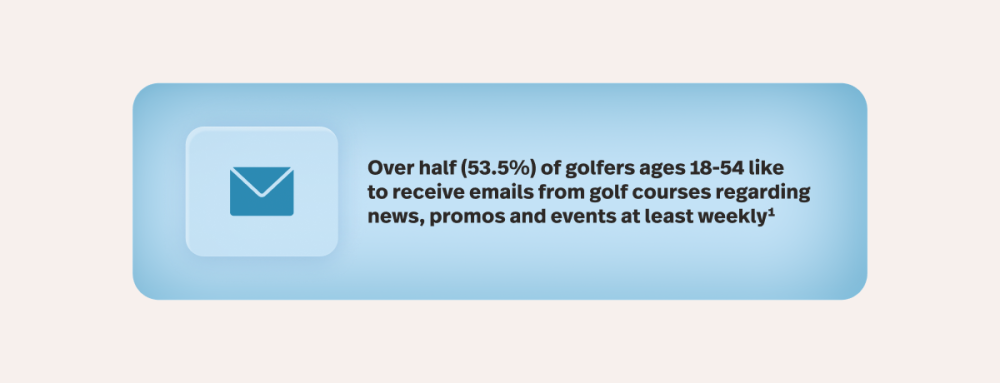
Email marketing remains one of the most effective tools in any golf course marketing strategy.
Why? Because it gives you direct access to your audience and drives loyalty and retention.
Unlike social media or paid ads, where algorithms control who sees your content, email allows you to communicate with golfers who already know your brand. These are your most valuable customers and your biggest opportunity to drive repeat revenue.
However, blasting poorly designed emails at random to your entire database simply won’t work. The key is to leverage strategy and automation to send the right emails, to the right people at the right time.
1. Segment your list and send emails with a purpose
Golfers’ email addresses arrive in your database from a wide range of sources: newsletter subscribers, booking confirmations, membership sign-ups and inquiries, pro shop purchases and more. Golf course management software like Lightspeed can help you properly segment and organize these contacts into categories such as (but not limited to):
- Player type (public players, private members, age category)
- The last time the recipient played at your course
- How often someone played at your course in a set period
- Those who have inquired about membership or a season pass
- Golfers who have booked but canceled
- Those who have purchased items from the pro shop
- Newsletter recipients only
- Members, season pass holders
You can then send highly targeted emails that resonate with these groups—from specials and promos to newsletters, special event sign-ups and more. It’s even possible to fully automate this process based on customer activity so you never miss an opportunity.
With a sound segmentation strategy in place, you can increase open rates, decrease unsubscribes and stay relevant to customers at different stages of the marketing funnel.
2. Send emails that golfers actually want to open
No matter the email, you are likely to see better engagement and conversions if you use beautiful, branded templates, engaging copy and clear call-to-actions.
It’s important to be intentional when designing your email templates and drafting copy.
Whereas newsletters can contain multiple modules for words and images, promotional emails should be short on copy, visually striking and immediately draw the recipient to the promo details.
Every email you send should answer one simple question: why should someone care about this?
Strong golf course email campaigns often include:
- Exclusive tee time promotions
- Upcoming events and tournaments
- Course condition updates
- Seasonal offers
- Instructional content or tips from your pros
3. Automate your email marketing to drive consistent revenue
Automation is where email marketing becomes a true revenue driver.
Rather than manually sending campaigns, automated workflows allow you to trigger emails based on customer actions or milestones. This ensures your messaging is timely, relevant, and consistent—without adding more work for your team.
Some high-impact automated campaigns include:
- Welcome emails for new customers or subscribers
- Birthday offers to encourage celebratory rounds
- Post-round follow-ups with offers or feedback requests
- Win-back campaigns for golfers who haven’t played in 30, 60, or 90 days
- Event reminders and confirmations
These campaigns work because they reach golfers at the right moment with the right message.
And when paired with a strong CRM or golf course management system, automation becomes even more powerful—allowing you to personalize messaging based on real customer data.
4. Use data to continuously improve performance
Open rates, bounce rates, click-through-rates—these key data points help you understand which emails are working and which ones miss the mark.
This data should be readily and easily available via your golf software’s email marketing module, so make a habit of reviewing your email data with your team and plot out any necessary adjustments.
Email marketing takeaway
Email marketing is still an effective golf course marketing tactic given its ability to target existing customers with timely, relevant messaging. Used strategically, it can supercharge retention and strengthen customer relationships.
The key is to move beyond generic blasts and focus on targeted, automated and data-driven campaigns.
SMS Marketing: Reach golfers on their mobile devices
Because of its immediacy, SMS or Text Message marketing is ideal for:
- Last-minute tee time availability
- Food and beverage promotions during rounds
- Event reminders
For example, sending a food and beverage offer to golfers currently on the course can significantly increase per-round spend.
The key is to ensure every message provides clear and immediate value.
Provided you’re collecting emails and phone numbers at the point of booking, setting up SMS notifications is easy and should be available from your golf management software.
1. Find the right cadence and tone:
Set an email/SMS cadence leading up to their booking that reminds and informs, not alienates. Try to be succinct and clear, striking a balance between key messaging and ensuring golfers feel appreciated.
2. Include a call-to-action:
SMS marketing is useful for booking reminders because it drives user engagement. Subject to applicable local marketing regulations, you can use this to your advantage by encouraging golfers to respond to your reminder message. Include a prompt that allows them to confirm their booking using “Y” and “N” or modify/change their booking with “C”.
This is what the flow could look like:
- Initial confirmation: Sent immediately after booking, confirming the time and date
- Reminder message: Sent 24-48 hours in advance, reminding them of their upcoming time with a prompt to confirm, cancel or modify
- Modification message: Sent when a golfer wants to modify or cancel booking, prompting them to contact pro shop and reminds them of your cancellation policy
- Confirmation message: Sent when golfer confirms their booking, thanking and reminding them of arrival rules and course policies
Send reminder messages close enough to create urgency, but early enough that they can still adjust or cancel if needed. This way, if they do cancel, you’ll have plenty of time to re-sell that slot.
Google Business Profile: Optimizing online visibility
So much of digital marketing is having the right information accessible in the right places. One of those right places is undeniably Google. From standard Google searches to AI-generated overviews, ensuring users have access to your most up-to-date facility information is incredibly important.
This is where your Google Business Profile comes in.
1. Set up your Google Business Profile
The Google Business Profile listing is a free tool that allows golf courses to manage their online presence across Google Search and Maps. It includes the following:
- Business Name – The official name of your golf course
- Address – The physical location of the course, with a link to Google Maps
- Phone Number – A direct contact number for inquiries and bookings
- Website – A link to your course’s official website
- Hours of Operation – The days and hours your course is open for play
- Business Category – Golf Course, Driving Range, etc.
- Photos and Videos – Visuals showing your layout, clubhouse, amenities, etc.
- Reviews and Ratings – Customer reviews, along with the overall rating out of five stars
- Posts – Updates about events, promotions, or news
- Services – Information on offerings such as tee times, lessons and tournaments
- FAQs – A section allowing users to see common questions and inquiries
Your Google Business Profile listing is useful regardless of whether users are searching for “local golf courses” or for your specific golf facility. A well-optimized listing with accurate course details, photos, reviews and hours can help you boost visibility, build trust and make it easier for golfers to book tee times.
2. Actively manage your online reviews
Managing online reviews is a crucial part of maintaining a strong Google Business Profile listing. This is especially important in a world now dominated by AI search, where user sentiment plays a massive role in shaping AI overviews and results in LLMs.
Take a proactive approach to your online reputation by:
- Monitoring regularly: Track new reviews consistently across all relevant platforms
- Responding promptly: Respond to positive and negative reviews promptly to show you care
- Staying professional: Keep responses polite, especially when addressing criticism
- Encouraging reviews: Invite satisfied golfers to leave reviews to help boost your credibility
- Learning from feedback: Use feedback to identify key areas for improvement
Customer Loyalty: Capitalizing on the power of retention
From marketing and on-site experiences to post-round communications, fostering retention across your customer journey plays a key role in the long-term success of your facility.
Driving retention comes down to the quality of on-site experience you offer, but you can also incentivize and reward repeat customers with the right marketing tactics.
Generating loyalty via your golf course marketing ideas is so powerful because repeat customers spend more over time, book more frequently and are more likely to refer friends and family.
Here are some ideas that can fuel your loyalty strategy.
1. Implement a personalized customer loyalty program
Implementing a rewards points system incentivizes customers to spend and goes far beyond the paper punch cards of the past. Give customers a goal to work towards and the status of maintaining a certain balance. The problem with so many of these loyalty schemes is that they’re generic. Everyone gets the same offers, the same rewards, the same messaging.
While you could argue that this democratizes the program, it also means it’s rarely a factor when deciding where to shop. Customer expectations around personalization are high, but so are the potential rewards.
If you can personalize the way you interact with each customer, then you can drive greater loyalty. This will give you greater insights into the customer which can further improve your personalization and further increase loyalty.
2. Reward your top spenders
Retaining valuable customers and generating as much revenue as possible from your top spenders is a proven strategy for boosting the bottom line. The 80/20 rule states that approximately 80 percent of your revenue comes from 20% of your customers. However, identifying your VIPs isn’t always easy so we recommend introducing loyalty programs designed to reward your highest spenders.
Loyalty programs are particularly useful for this because they collect robust data and can help you identify exactly who your top spenders are and who could become a top spender if nurtured correctly. Customer loyalty programs are also one of the best ways to strengthen your relationship with your loyal customers and get them to visit the
Customer loyalty takeaway
If you want to increase golf course revenue, don’t just focus on getting new customers—focus on keeping the ones you already have.
A strong loyalty strategy helps you build lasting relationships, increase repeat visits, and create a more predictable revenue stream.
Lightspeed Digital Services: Collaborate with marketing experts
Having an arsenal of golf course marketing ideas is great, but as any operator knows, it can be very difficult to keep up with them all as the season gains momentum.
The grind of managing daily operations doesn’t leave a lot of time to plan, launch and track campaigns that can help you drive revenue.
That’s where Lightspeed’s Digital Services team can help. Our in-house experts will act as your dedicated marketing team, handling the execution of regular campaigns and continuously tracking and optimizing in order to drive the most engagement and value.
Get a fully-loaded site that drives purchases: Our experts design beautiful, ecommerce-enabled golf course websites, collaborating with you to define a strategic marketing direction from day one. We handle setup, updates and refinements to help you maintain a strong online presence.
Put your marketing strategy in expert hands: We act as your dedicated marketing team, executing strategic campaigns aimed at visits, bookings and purchases. Through continuous tracking and optimization, we ensure you maximize every marketing dollar.
A strategic partnership for the long term: We provide ongoing strategic guidance, performance reporting and education, empowering courses with the data and insights they need to drive new growth, as well as golfer lifetime value.
Get the most out of your Lightspeed platform: Our in-house specialists offer unmatched product support and expertise, ensuring you get the most out of Lightspeed and that you can make informed, high-impact sales and marketing decisions.
Dial in your online presence
From professional website design to tailored digital marketing strategies, Lightspeed's Digital Services team can help you reach more golfers and drive more bookings
Golf course data collection: Marketing shouldn’t be guesswork
Not every tactic is going to be a success.
A major advantage of using platforms like Lightspeed, Facebook, Instagram and Google is how much easier it is for golf course operators to access objective metrics on what worked, what didn’t and why. Data-fueled digital marketing can help you:
- Create focused marketing strategies
- Track goals against clear performance metrics
- Evaluate the ROI of your activities and campaigns
- Make data-driven adjustments and optimizations for the future
The data available in your golf management software and other platforms can help you stay focused on the tactics that matter most to your course. With daily tasks taking up so much time, finding ways to operate with more efficiency and decisiveness can make a major difference.
1. Build a living, breathing customer database for re-marketing
The more you know about your customers, the more effective your marketing becomes.
That starts with collecting and organizing the right data at every opportunity—especially at the point of booking. Every tee time reservation is a chance to capture key contact details:
- Name
- Email addresses
- Phone numbers
- Player type
But collecting data is only part of the equation. The real value comes from connecting that information into a complete customer profile.
When your systems are set up properly, you can begin to understand how each golfer interacts with your course. You can see how often they play, when they typically book, how much they spend across golf, food and beverage and retail, and what types of offers they respond to. These insights give you a much clearer picture of your customers’ preferences and behaviors.
Golf software like Lightspeed allows you to automatically capture and centralize this data without adding extra work for your team. Instead of scattered or incomplete records, you have a single, unified view of each customer that updates with every visit, purchase and interaction.
2. Use audience segmentation to remarket effectively
Once you have these profiles in place, your marketing efforts can become far more precise.
Rather than sending the same messages to your entire database, you can segment your audience and tailor your campaigns accordingly.
- Frequent players might receive loyalty rewards or early access to tee times
- Infrequent golfers can be targeted with re-engagement offers
- High spenders can be treated as VIPs with exclusive perks or experiences
This level of targeting is especially powerful when it comes to re-marketing. When you know who your customers are and how they behave, you can reach them with relevant offers at the right time—whether that’s an email to someone who hasn’t played in 60 days, a promotion for a golfer who typically books weekday rounds or a last-minute tee time offer sent to your most engaged players.
Instead of guessing what might work, you’re using real data to guide your decisions.
And over time, that shift—from broad, generic marketing to targeted, data-driven campaigns—leads to higher engagement, more bookings and stronger customer relationships.
3. Use your reporting tools to guide strategy
Modern golf course management systems provide a wealth of reporting tools, but their real value comes from how you use them to guide your decisions.
Many operators have access to detailed reports but only review them occasionally or at a surface level. The most effective courses take a different approach. They make reporting a regular part of how they plan, evaluate and refine their marketing strategy.
When used properly, these tools give you a clear picture of how your business is performing.
You can start to understand booking patterns across your tee sheet:
- When demand is strongest
- When it drops off
- How these trends shift over the season
Just as importantly, reporting helps you uncover opportunities that might otherwise go unnoticed.
You might identify gaps in your tee sheet during specific time windows, trends in how customers are booking, or shifts in how revenue is being generated across golf, food and beverage, and retail. With this information, you can adjust your strategy to better align with demand and maximize revenue across your operation.
4. Track performance
Reporting also allows you to measure the true impact of your marketing efforts.
Instead of wondering whether a promotion worked, you can see exactly how it performed. You can track how many bookings were generated, which customer segments responded, and how much revenue was tied to that campaign. Over time, this gives you a much clearer understanding of what resonates with your audience and what doesn’t.
For example, you may find that certain types of offers consistently drive more bookings, or that specific groups of golfers are far more responsive than others. These insights allow you to refine your approach and focus your efforts where they will have the greatest impact.
The key is consistency.
Rather than reviewing reports sporadically, build a habit of regularly analyzing your data and using it to inform your next move. Over time, this creates a more proactive and strategic approach to marketing.
Instead of relying on instinct alone, you’re making decisions based on real performance data. And that shift leads to more efficient campaigns, better use of your resources, and stronger overall results.
Marketing data takeaway
If you want to take your golf course marketing to the next level, data is the key.
It allows you to move from guesswork to strategy—helping you make smarter decisions, improve performance and drive consistent growth.
Wrapping up: It’s time to take action on marketing strategy
Golf’s sustained popularity and incredible momentum in 2026 means it is high-time for golf courses to capitalize on the demand we’re seeing in the industry. By leveraging the right marketing tactics, golf facilities have a better chance to reach golfers where they are and drive up bookings.
Looking for help? Find out how Lightspeed offers both the platform and the marketing services needed to elevate your sales and marketing strategy. Talk to an expert today to learn more.

News you care about. Tips you can use.
Everything your business needs to grow, delivered straight to your inbox.