atis: Healthy food, speedy growth and the tech to keep up
Born during Covid, atis was created to redefine what fast, nourishing food can be. Over seven years, atis grew from a single shop on Old Street into one of London's most ambitious quick-service operators. With 17 locations, more than 300 people onboard, and nine new sites opened in under 12 months, atis is proof that a great product with a clear culture and brand can scale. Central to keeping that growth running smoothly is Lightspeed. Keep reading to find out how.

From a lockdown dream to London's healthiest obsession
Igor Morandi, Technology Manager at atis, takes us back to where it all began. From the first site on Old Street to the second and third that followed in Victoria and Notting Hill Gate. The vision was simple and uncompromising from the start: powerful, healthy food in a world where convenience too often means compromise.
Five years on, that mission hasn't changed. What has changed is the scale: atis doubled the size of the company in less than a year, opening nine new London sites in quick succession. 2025 was the sprint. 2026 is the consolidation, refining processes, raising standards, and making sure the product is better than ever before.
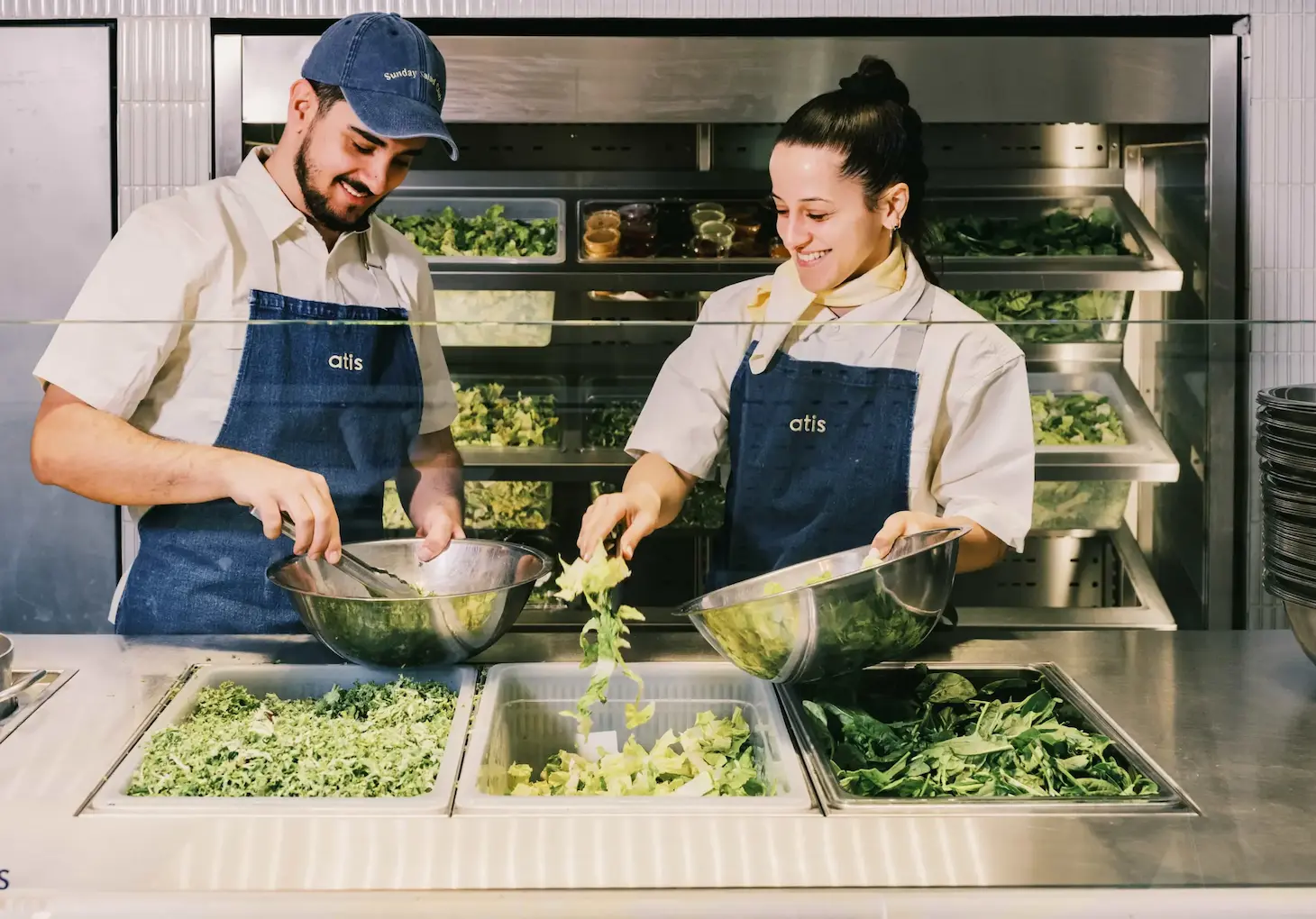
"We haven't changed our culture since day one," says Igor. "To maintain that relationship between head office and team members through this kind of expansion, that's what I'm most proud of, and for example, all HQ employees do a trial on site so they can understand first hand the operation process."


"We haven't changed our culture since day one. To maintain that relationship between head office and team members through this kind of expansion, that's what I'm most proud of."
Igor Morandi, Technology ManagerKeeping 16 locations in sync
Managing menus, updates and operations across 17 sites could easily become a full-time nightmare. With Lightspeed, it isn't.
Atis runs a central location setup: one menu is built, then pushed out to every other site simultaneously. What could be a logistical headache becomes a routine task.
"When I build a menu, I go into one location, I build everything there, and I literally just share it with the other locations. That's it," he explains. "Imagine doing an item update for 17 stores individually. That would be quite painful."
As atis continues to grow with further expansion on the horizon, that kind of scalable, centralised architecture isn't just convenient. It's essential.
A tech stack that actually connects
Integrations were a key reason atis chose Lightspeed from the start, and they remain central to how the business operates today. Payments, inventory management, third-party delivery and a number of bespoke in-house builds all sit within the same ecosystem.
"When you start a business, make sure everything connects to each other and it works smoothly," he says. "With Lightspeed, as soon as I arrived, everything was linked."
The team has also recently rolled out production centres to manage the launch of shakes and smoothies across all sites, mapping orders to the right printers in the right kitchens, without confusion. Adopting our Kitchen Display System is the next step, so their staff can have a cleaner, faster view of every order.
Staff first, always
For the atis team, the most important measure of any technology is simple: can the staff actually use it?
The answer for Lightspeed is yes. Menu items are colour-coded (green for core, red for seasonal) and tagged with emojis so staff can identify dishes at a glance during a busy rush. Training new team members on the system is quick, intuitive and low-friction.
"If the staff find it easy, I'm happy," Igor says. It's a mindset that puts people before process, and it's working. As atis scales, a system that every team member can pick up quickly is not a nice-to-have. It's a competitive advantage.
"Previous places I worked, things didn't integrate with the ePOS. But with Lightspeed, as soon as I arrived, everything was linked."
Igor Morandi, Technology ManagerSmart growth in a tough market
Rising labour costs. Rising food costs. Rising guest expectations. The pressure on hospitality operators in 2026 is real, and atis is responding to it not by adding complexity, but by investing deeper on what's already working.
"Let's not get another software that costs 100K a year," Igor says. "Let's use what we have at 100% and let's find savings in food, in packaging, and let's raise the wages for our staff."
That philosophy extends to Lightspeed. The team is actively exploring features like Tempo, Lightspeed's new service-timing analytics tool, to understand order fulfilment speeds and identify where the kitchen can move faster. The goal, as always, is to make a great experience even better.

atis uses Integrations to streamline their operations.
Find out how you can too.