Hungry for change: How UK hospitality can beat the labour shortage and attract new talent

The UK hospitality sector has weathered years of disruption, from Brexit and the pandemic to ongoing economic uncertainty. Yet in 2025, the industry’s biggest challenge remains the same: finding and keeping great people. Labour shortages continue to affect every part of the sector, from bustling restaurants and boutique hotels to pubs and quick-service chains, putting pressure on operations and limiting growth.
But this isn’t just a numbers problem; it’s a perception problem. For too long, hospitality has struggled with an image of instability, low pay, and limited career progression. Today’s workers, especially Gen Z and Millennials, want flexibility, purpose, and development opportunities, and they’re not afraid to look elsewhere to find them.
So how can hospitality transform its reputation and become an industry people are proud to build a career in? Let’s explore how UK businesses can rethink recruitment, invest in technology, and create a culture that attracts and retains the talent needed to thrive in 2025 and beyond.
Get top tips for hiring smart
Download our guide, with tips on everything from hiring new team members to lowering labour costs

Offer job security in an uncertain market
Job security remains one of the biggest challenges, and opportunities, for UK hospitality in 2025. While Brexit and the pandemic exposed the industry’s vulnerability, the deeper issue is structural. For years, the sector has relied heavily on flexible, low-stability contracts that left many workers unsure of their future. In a cost-of-living crisis, that uncertainty simply isn’t sustainable.
Today’s workforce expects clarity, consistency, and career progression. Yet according to recent reports, hospitality still accounts for one of the highest proportions of zero-hour contracts in the UK. Many skilled chefs, bartenders, and servers have since moved into retail, logistics, or tech, all industries that offer steadier income and greater long-term prospects.
To rebuild trust and attract talent back, businesses need to make stability part of their employer brand. Even small changes can make a big impact:
- Offer fixed or guaranteed hours. Where possible, provide permanent or fixed-term contracts for key roles. If flexibility is essential, set clear minimum or maximum hours so staff can plan their lives confidently.
- Invest in upskilling. Support career progression through training and certifications that help staff see a future in your business, not just a job.
- Communicate transparently. Even if full job security isn’t possible, being honest about scheduling, pay, and growth opportunities builds loyalty and reduces turnover.
In 2025, job security is no longer a perk, but a prerequisite. Restaurants, pubs, and hotels that prioritise stability will not only attract better candidates but also foster a more motivated, long-term team.
Prioritise work-life balance to retain talent
Hospitality has never been a nine-to-five industry. Busy weekends, late nights, and long shifts are part of the job, but that doesn’t mean burnout has to be. In 2025, work-life balance has become one of the most important factors for attracting and keeping hospitality talent. Employees today, especially younger generations, are prioritising flexibility, wellbeing, and mental health just as much as pay.
A healthy balance between work and life leads to happier, more engaged employees who deliver better service and stay longer. Research consistently shows that when staff feel supported by their employer, they form a stronger connection to the organisation and perform at a higher level.

Unfortunately, hospitality has long normalised overworking as part of the culture. But in a competitive labour market, that mindset has to change. Work-life balance isn’t a “nice-to-have”, but a strategic advantage that can boost retention, morale, and customer satisfaction.
Here’s how hospitality businesses can make it happen:
- Design smarter schedules. Collaborate with staff to create fair, predictable rotas that respect personal time while maximising productivity. Avoid overloading key team members or relying too heavily on a single skillset.
- Empower staff with flexibility. Use modern scheduling tools to let employees set availability, swap shifts, or request time off directly from their phones.
- Promote rest and wellbeing. Encourage breaks, set boundaries for communication outside working hours, and provide access to wellness programs or mental health support where possible.
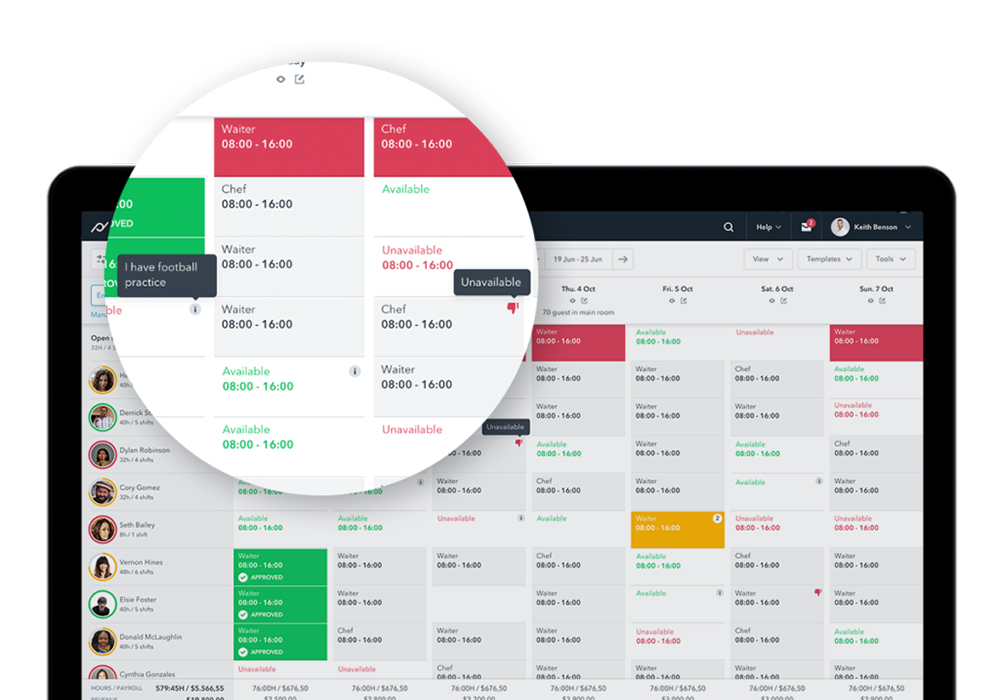
When staff feel trusted and supported, they’re more motivated, more consistent, and more likely to stay. In a sector defined by people, protecting your team’s wellbeing is one of the most effective ways to protect your business.
See Lightspeed in action
Don’t just take it from us, watch our demo and find out what Lightspeed can do for you
Improve workflow efficiency
Speaking of work-life balance, what if hours and workloads could be reduced through the power of technology?
By updating your business’s digital tech, you can work to reduce staff workload as processes that once were time-consuming become automated.

To do this, a cloud-based point of sale like Lightspeed ePOS is a must-have. It brings your restaurant operations into the cloud so you can save time, run your business more easily, and save your staff’s sanity.
How a cloud-based ePOS could make employees’ lives easier
- Advanced inventory management tools mean staff spend less time on stock counts and can focus more on improving the customer experience
- Integrated payments softwareeliminates the need for manual reconciliation at the end of shifts by automatically sending card transaction data to your ePOS.
- Update menus in seconds and use product reports to see which menu items are selling best.
- Use contactless ordering software to save the journeys made to and from the dining floor.
- Use kitchen display screens to replace paper printers, and improve workflow efficiency in the kitchen.
- Speed up staff training with a modern, intuitive user interface.
Tech your staff will love
Looking to make your restaurant workflow easier? Save time, reduce stress and ignite your business with an advanced ePOS system. Watch a demo to see what Lightspeed ePOS can do for you
Invest in careers
Few things could benefit a business more than investing in the professional development of its staff.
By doing so, a business can foster a more motivated, loyal and engaged workforce that value their roles as career paths.
One thing that deters people away from hospitality is the lack of prospects for further career development.
This is partially cultural, with hospitality professions like waiters traditionally being seen as not a ‘real career’ in the UK, with higher value placed on white-collar work.
But this simply isn’t true, and hospitality workers should be able to enjoy vibrant and stable careers.
If businesses can get younger workers excited about a career in hospitality, they could lower staff turnover as well as recruitment andlabour costs. Moreover, investing in your staff helps them realise their value.
Enrol staff in apprenticeships
An effective way to invest in the staff’s career is by entering them into an apprenticeship. That way, they can hone their skills to benefit your business, while forging a career path for themselves.
Some apprenticeships for hospitality works include:
- HIT Training offer apprenticeships from a broad range of roles from Commis Chef to Hospitality Manager. They take on apprenticeships 16 or over who have a full-time contract with the hospitality sector.
- Umbrella Training offer pathways for careers at all levels within hospitality. From Hospitality Team Member apprenticeships at level 2, all the way up to Operations and Departmental Manager apprenticeships at level 5.
Investing in your staff through apprenticeships can make your business better.
According to apprenticeships.gov.uk, 92% of companies that have taken on apprentices have said its lead to a more motivated and satisfied workforce.
Pay fairly
Fair pay is another sticking point when it comes to attracting people into hospitality.
Long, unsociable hours combined with low pay results in potentially toxic working conditions. Because of this, many workers are looking to other industries.
While higher wages may eat into your margins slightly, the cost of unhappy staff and high turnover rates is much higher.
Much like work-life balance, higher-paid staff generally means happier staff. That has a positive knock-on effect by creating more loyal and productive employees.
If we want people to approach hospitality as a career and not just a side-gig, we need to ensure that things like a proper living wage, as well as paid-time-off and sick pay, are a rule, not an exception.
Let’s rethink hospitality
If working conditions don’t improve for hospitality workers, more and more skilled employees will look for work elsewhere.
For hospitality to continue to bring joy to millions, it’s time to start considering the wellbeing of those who help bring it.

News you care about. Tips you can use.
Everything your business needs to grow, delivered straight to your inbox.