
Ready to uncork your entrepreneurial spirit and open a bar?
Before you get started, you’ll have to take some steps to set you off on the right foot. While it’s never a shortcut to success, taking the right steps at the right time will lay a solid foundation for your future.
Before you know it, you’ll be mixing innovative cocktails, pouring perfect serves, and cultivating a thriving community.
But first, let’s cover the essential, foundational steps.
1. Write a solid business plan
2. Define a business structure
3. Obtain the right licenses
4. Choose a location
5. Nail your inventory management
6. Hire an all-star bar staff
7. Get equipped
Get the ultimate bar and pub guide
Learn how to drive your restaurant forward with powerful tech.

1. Write a solid business plan
A robust business plan is the cornerstone of any successful venture. It’s your strategic roadmap, vital for attracting investors, securing funding, and clearly defining your vision.
A bar is a business, just like any other. To attract investors or obtain funding, you’ll need to convince stakeholders that your business holds water and you’re serious about it.
This should be at least a one page document outlining your goals, and strategies for achieving them. Your business plan is the springboard from which to launch your business, so don’t skip this step.
Concept
We’re often spoiled for choice of places to enjoy a beer or cocktail. In such a crowded environment, you may need a concept for your bar: a theme, approach or philosophy that sets it apart from the competition.
There’s no need to overthink it tough.
Consider the success of venues that have honed in on a niche, like a spot famous for its signature brunch cocktails and gourmet grilled sandwiches, or a wine bar known for its curated selection and educational tastings.
What unique value can you offer? How can you cultivate a distinctive brand identity that resonates with your target audience and sets you apart?
Incorporate AI
Beyond the initial groundwork, consider how modern tools can streamline your process. For instance, AI-powered tools can be invaluable in the early stages, helping you brainstorm unique bar names, develop distinctive branding concepts, or even analyze market trends for your business plan. As you scale your vision, AI can assist with predictive analytics for inventory, personalized marketing campaigns, and optimizing staff scheduling across multiple venues. Speaking of expansion, if this isn’t your first venture, or if you plan to launch multiple locations simultaneously or in sequence, remember that each new outpost will require a fresh look at local regulations, staffing, and supply chains. It’s not just a copy-paste; it’s about replicating your core concept while adapting to the unique nuances of a new market. Finally, always be aware that licensing and certification laws are subject to frequent updates – what was true last year might have changed, so regular checks with local authorities and legal counsel are paramount for continued compliance.
Current opportunity
Why is now the time to open a bar?
Maybe tourism is making its way back to your town or city. Perhaps the pandemic left a gap for places to grab a pint or a cocktail.
Thorough market research is crucial. Investigate current demand, demographic shifts, and emerging lifestyle trends in your chosen area.
Key success factors
Once you’ve outlined your opportunities it’s time to consider what success will look like, and how to measure it.
Maybe you want to be profitable by a specified time, or in a position to open a second location two years from now.
Setting out key success factors from the get-go can help you steer your bar in the right direction from day one.
Vision statement
A vision statement should encapsulate all of the above into a clear and concise roadmap for where you want your bar to go.
How will your goals and ethos guide your actions now and into the future? What core competencies does your bar need to be successful in the long term?
A vision statement should answer these questions, and help develop a long term vision that the business keeps on track.
2. Define a business structure
Your bar’s legal structure determines what taxes it pays and how it’s seen in the eyes of the law.
The legal form you choose depends on how your bar business is structured, what you want it to do, what investments you want to make and whether you want to collaborate with other enterprises. While specific requirements vary by region, there are common forms to consider when structuring your business:
Sole proprietorship
If you’re going it alone, you can register as a sole trader. In this form, you own and control your business’s assets, and have personal liability over the company’s debts and obligations.
Generally, there’s less regulatory burden, but the owner is responsible for their own tax filings. Moreover, the liability of your business rests entirely on your shoulders since there’s no separation between your private and business assets.
Limited Liability Company (LLC)
Another option is to start a private limited company. Through this arrangement business owners have limited liability: your losses can only amount to what you or your shareholders have invested in the company. Your private assets are not at risk.
With a PLC, you pay corporate tax, and will have to do a little more paperwork to register with Companies House.
3. Obtain the right licenses
Operating legally requires a range of permits and licenses, which differ significantly based on your location and the services you offer. Obtaining them is usually one of the easier and less expensive parts of opening a bar.
Alcohol license
An alcohol license is fundamental for any bar operation. It’s crucial to understand that liquor licensing laws are highly localized, often requiring multiple permits depending on your jurisdiction. Typically, this involves separate licenses for the premises and for the individual responsible for alcohol sales. Once licensed, you are often legally obliged to buy alcohol from authorized suppliers.
Premises License
A premises license is what authorises your business to buy and sell alcohol. It differs from a personal license in that no individual can hold it, only physical locations.
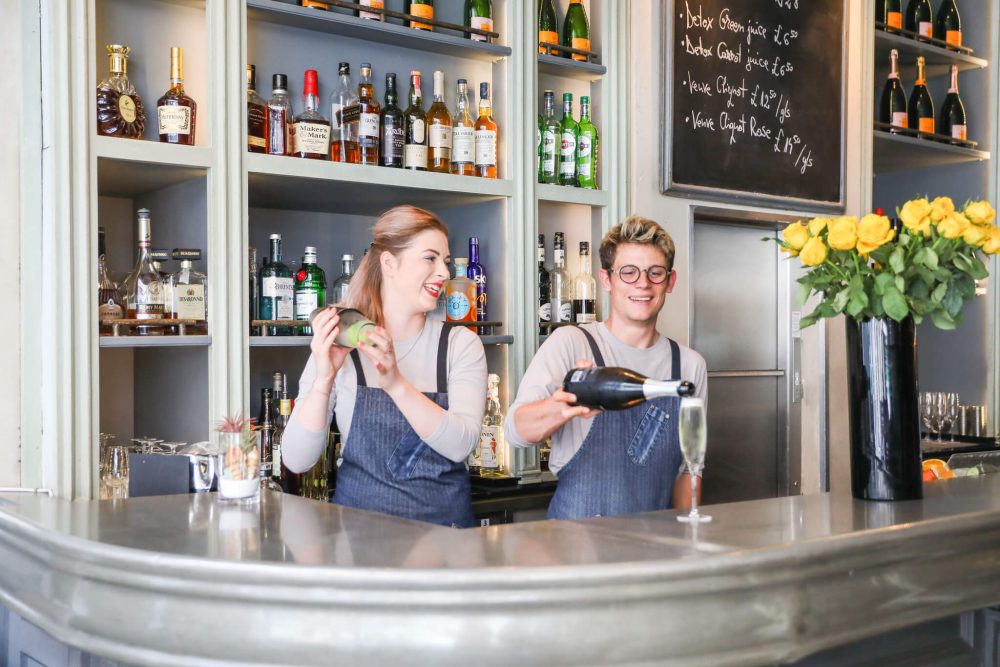
However, that location doesn’t need to be fixed. If you’re a pop-up, food truck or a party boat, for example, you will also need a premises license.
A premises license isn’t just for alcohol either. You also need one if you plan to have evening entertainment in your restaurant, or to serve food any time between 11pm and 5am.
Personal License
A premises license alone is not enough to be able to sell alcohol at your restaurant. In conjunction with a premises license, you also need a personal license.
This allows certain individuals to serve alcohol on a licensed premises. When held, it often designates you or a key manager as the supervisor responsible for alcohol service.
Under your supervision, non-licensed individuals can sell alcohol on a licensed premises, provided they’re over-eighteen (and know how to make a good margarita).
How much is an alcohol license?
The cost of a premises license varies depending on the rateable value of your commercial property. Either way, you will have to pay both an application fee and an annual charge. The higher the rateable value of your restaurant premise, the higher the fees for an alcohol license will be.
Outdoor seating patio
Many local governments require a specific permit to place tables, chairs, and other furniture on public sidewalks or outdoor areas.
Rules, restrictions and fees vary region to region.
Certain restrictions apply on how big the furniture can be. You will also have to leave an amount of pavement space free for pedestrian traffic and clearly mark the borders of your outdoor seating area.
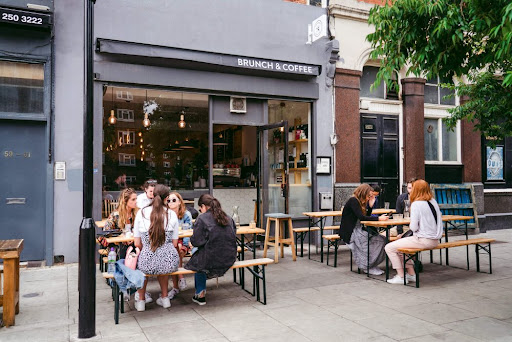
When applying you’ll need to supply a site plan and a public liability insurance certificate, and may be subject to fines if you fail to meet the requirement or fail to pay the license fee. Costs for such permits vary widely by location.
4. Choose a location
Your bar’s location is paramount to its success. It could determine whether your new venue will succeed or fail—so don’t approach it lightly.
Many variables contribute to landing upon a lucrative bar location. Much will depend on existing brand awareness, target audience and local factors.
Opening another bar?
For those with aspirations beyond a single establishment, the blueprint for opening another bar leverages many of the same foundational steps, but with an added layer of strategic complexity. Opening multiple locations isn’t simply replicating your first success; it involves meticulously analyzing new demographics, adapting your concept to local tastes, and ensuring consistent brand experience across diverse markets. Critical to this is developing robust standard operating procedures, building a strong, decentralized management team, and leveraging technology to maintain oversight of inventory, sales, and staffing from a central hub. Whether you’re planning your second venue or dreaming of a national chain, the challenge lies in scaling your unique offering while fostering local appeal and operational efficiency in every new footprint.”
Consider planning regulations
Zoning and land-use regulations are paramount. Commercial buildings are classified based on their intended use, and if your chosen property wasn’t previously a hospitality venue, you’ll likely need to secure a change of use permit from local planning authorities. Each jurisdiction has its own classification system; ensure your proposed location aligns with the appropriate zoning for a bar or restaurant, or be prepared to navigate the process of re-zoning or obtaining special permits.
Consider your target customers
Think back to your business plan—how did you define your target customer? Where they students, young professionals, retirees?
Defining your demographics can help inform your decision about where to locate your bar.
Consider too where your target audience intersects. London wine bar and restaurant Humble Grape carefully picked their London locations so they could take full advantage of both weekday office trade and weekend trade – both of which were often the same people.
“Many of our locations share customers,” says Kevin Coatzee, Head of People and Operations. “People who visit our Fleet Street location after work will come to Battersea or Islington on the weekend. We want to ensure they get something different, that it’s not just the same everywhere.”
Take foot or car traffic into account
While the location isn’t everything (food, drinks and service obviously play a role too), choosing a restaurant located in a high foot traffic area could have a big impact on how your new location performs.
It’s simple: the more people pass by your bar, the greater your chances of attracting newcomers.
Scope out the competition
Let’s say you’ve found the perfect location: minimal start-ups costs, a local demographic that fits your ideal buyer persona, foot traffic for days. But wait—there’s a competitor on the same street with a near-identical offering to yours.
Realising this too late could set you back, so get an idea of the competitor landscape in the area you’ve set your sights on.
That said, opening near a competitor isn’t the end of the world. In fact, it’s just business.
Businesses often go for optimal locations where they can serve the most amount of customers. That’s why competing businesses open right next door to each other.
In a highly desirable business location, it’s unavoidable that competitors will have already beat you to it or will follow shortly after.

You can’t avoid competition outright. See it instead as an opportunity to set your business apart.
If you do have competitors in your desired neighbourhood, put together a strategy as to how you can keep your share of the local clientele
5. Nail your inventory management
Your bar won’t go very far if it doesn’t have inventory. Stock control is a key aspect of bar management and you’d be wise to consolidate a system before opening a bar.
When you’re able to accurately track your stock, you can better protect your profit margins by avoiding overstocking and ensure that you’re making maximum revenue from the inventory you have.
Forget spreadsheets, modern bar ePOS systems make for a much faster and more accurate inventory management software.
They allow bar managers to upload and track inventory from an easy-to-navigate online back office where you can monitor liquor sales by the millimeter.
Accurately track stock levels
Let’s say, for example, that the most popular cocktail at your bar is a Caipirinha. You can’t make a Caipirinha without Cachaça, right?
You need a way to make sure you don’t run out of this vital ingredient when you need it most.
Here’s how ePOS inventory management can stop that from happening.
- After uploading fifteen units (700ml bottles) of Cachaca to your ePOS’s stock management platform, you create the menu item Caipirinha. You list its constituent ingredients into sub-units, and link the sub-units to their stock item (the fifteen units of Cachaca).
- So for one Caipirinha, you use one sub-unit of Cachaca – which totals 50ml. Your current stock levels you make 210 Caipirinhas. That should be enough for the coming weekend.
- Since this sub-unit is linked to the unit item in inventory, 50ml is subtracted from the total volume of Cachaca in stock each time you sell a Caipirinha.
Get notified when low on stock
So you’ve linked your menu items to their ingredients in your inventory. But how can you stay up to date with low inventory levels?
An advanced bar ePOS system will allow you to add certain ‘rules’ to inventory items, which trigger notification emails when a stock item goes below a predefined quantity.
These rules can be configured in the ePOS back office. Here’s how you do it in Lightspeed Restaurant ePOS:
- Go back to your fifteen units of Cachaca in the back office. How low can it go before you need to reorder? You might decide it’s best to set a rule for when you only have enough to last you one more business day (around 5 units).
- Before creating a rule, you can toggle whether or not the rule applies to all stock or not. In this case, we only select Cachaca.
- Now you’ve selected the unit item, you enter the number of units below which the rule will be applied for the chosen product—5 units.
- Now when the number of bottles reaches below five, you’ll be notified and can reorder promptly!
Start your business off on the right foot
Want to simplify, scale and ignite your potential? Find out what Lightspeed POS can do for you.

How Da Terra manage their wine list with Lightspeed
Inventory management features from Lightspeed ePOS help Da Terra’s staff track and manage wine usage for their pairing menu to the millimetre. They know exactly how much of each wine is used for each service and when they need to top up the cellar.
“Inventory management is straightforward with Lightspeed. We can see where we stand with what we’ve got and use inventory reports to see if we’re going through too much, or not enough” says Charlie Lee, Da Terra’s General Manager.
6. Hire an all-star bar staff
Before opening a bar, make sure you have people to keep it going. That should at least include bar staff—but consider other hospitality staff like hiring waiters and chefs if you want to serve food or deliver high quality customer service beyond the bar.
Bar manager/bartender
A bar manager is responsible for the running of your bar. That includes responsibilities such as:
- Controlling stock levels on both alcoholic and non-alcoholic beverages
- Negotiating supplier contracts
- Holding the appropriate licenses
- Dealing with drunken guests
- Supervising other bartenders
What makes good bar staff?
Bar staffs’ skill set sets them apart from other front of house staff. A bartender must not only possess basic bar skills (slicing limes, pulling pints etc.), they must also have a detailed knowledge of the composition of different long and short drinks.
An experienced bar manager has an extensive repertoire of handy bar tricks, and impart from onto the colleagues they supervise.
The fact that bar staffs’ work is done in the gaze of the customer means they should always exude an image of professionalism and work with flair and dynamism. They should also possess some knowledge of basic bar management.
Barback
A barback’s role is to ensure that the bartender has everything they need during service to keep everything running smoothly: clean glasses, enough garnishes, liquor, beer and spirits, ice cubes, etc.
Similarly to bussers (see below), they’re also responsible for keeping the service area tidy (cleaning up spills and broken glasses) and running to the walk-in to restock whatever’s running low.
What makes a good barback?
Suzannah Gerber, food and beverage industry consultant and owner of Haven Foods, adds that barbacks are a crucial part of a high-volume team, and they absolutely possess different skills than other service members.
“Barbacks need to keep an on inventory levels at all times during service and be aware of the movement and flow of orders and flight path of the bartender,” she says. “They also need to be strong enough to carry heavy items like kegs and be able to repair clogged taps or ice machines at a moment’s notice. A jack-of-all-trades barback can make huge differences in a bar’s service and flow”.
Busser
Bussers are the unsung heroes of any hospitality business. Their role is often seen as minor. Like any bar staff, however, they play a part that the whole operation would fall apart without.
Bussers are largely responsible for clearing glasses or plates from a customer’s tables when they’re finished, bringing them to the back of the house to be cleaned. It is perhaps the least glamorous of all other bar roles, but hardly the least important.
What makes a good busser?
A good busser is attentive. They don’t take customers’ glasses or plates away until everyone is finished. That requires a balance which sets them up to be great waiters, which they most often go on to become.
Despite their somewhat menial positions, bussers should be well presented and have enough knowledge of the ins and outs of the establishments to answer any basic questions customers may have.
7. Get equipped
Before you open a bar, you need to make sure you’re well equipped. Plan ahead for this, realising you’re short on equipment that you didn’t budget for can really set you back.
Here’s some equipment you won’t want to forget.
Cocktail and bartending equipment
- Glasses—this is really your bread and butter. Think tumblers, Collins glasses pint glasses, shot glasses, Martini glasses, brandy snifters et cetera.
- Bartending tools and accessories—all the things your bartender needs to succeed. Jiggers for measuring, shakers for mixing, citrus juicers for juicing and muddlers for, well, muddling. Also consider things like straws and stirrers, bar mats, chopping boards, bottle openers; the less glamorous but absolutely necessary stuff.
Beverages and beverage dispensing bar equipment
Your bar equipment list should also include a good selection of spirits, as well as liqueurs and mixers for cocktails.
- Alcoholic Beverages—this obviously includes your usual suspects: Vodka, Gin, Tequila, Whiskey, Bourbon, Rum.
- Basic liqueurs—Think Amaretto, Coffee Liqueur, Dry and sweet vermouth, Irish cream liqueur, Orange liqueur.
- Non-alcoholic mixers for mixed drinks—these are all of other ingredients you use to spice or sweeten up your cocktails. Think lemon and lime juice, bitters, gomme syrup, grenadine, milk and cream.
- Essentials soda—Tonic Water, Ginger Ale, Cola and Diet Cola.
- Fruit garnishes—Lemons, limes, oranges, maraschino cherries et cetera.
Bar furniture and other equipment
- Coolers and refrigeration—Kegerators, Beer coolers, Wine coolers, Additional cooler for garnishes
- Additional equipment—Speed rails, liquor dispensers, floor mats, ice wells, ice crusher, ice maker, blenders, waitress stalls, glass racks/holders
- Food and kitchen supplies—Grills, Fryers, Flat-top griddles, Plates, Cutlery, and whatever else lets your staff execute your menu efficiently.
Start strong
Launching your own bar is an ambitious and rewarding endeavour. By meticulously planning, understanding legal requirements, choosing the right location, optimising your operations, and building a stellar team, you’ll be well-positioned to create a thriving and memorable establishment.
Want to know more? Talk to one of our experts.

News you care about. Tips you can use.
Everything your business needs to grow, delivered straight to your inbox.