
If you’re reading this, chances are you’re either struggling to achieve your retail sales targets, or you’re hitting them—but you’re ready to exceed them more consistently. Either way, you’re in the right place.
This guide breaks down practical, proven tips to help you and your team not just meet your sales goals—but confidently outperform them. Here’s what we’ll cover:
- What are sales goals (and why do they matter)?
- How to set SMART goals
- How to set the right retail sales targets
- How to communicate your goals effectively
- How to motivate your sales team
- How to train employees for better performance
- How to build a store environment that drives sales
- How to build strong customer relationships
- How to offer flexible payment options
- How to track your progress and stay on course
Let’s get into it.
Run a thriving retail business
Retailers need to look to the future, stay ahead of trends and adopt the digital strategies that have kept industry leaders selling through unprecedented challenges. Read our guide to learn how to help your business thrive in the new era of commerce.
What are sales goals?
Sales goals are the specific revenue, volume or activity targets your business aims to hit within a specific period. They give your team a clear direction, help you evaluate performance and guide decisions around staffing, inventory and marketing.
Retail sales goals typically include (but are not limited to) key performance indicators (KPIs) related to:
- total revenue
- gross profit margins
- units sold
- average sale value
- conversion rate
- loyalty program signups
Sales goals turn broad ambitions into actionable numbers your team can rally behind, helping you stay focused, allocate resources and coach employees effectively. Clear targets also make it easier to track progress and adjust strategies faster, so your business stays more agile.
These goals can be tied to anything that moves the business forward—total revenue, units sold, margin, average transaction value, loyalty signups or even customer experience metrics. The key is having targets that reflect what success looks like for your store.
How to set SMART goals
SMART goals—which stands for specific, measurable, attainable, relevant and time-based—take the guesswork (and the wiggle room) out of your retail sales targets. Instead of vague aspirations like “sell more products,” setting SMART goals gives you a structured way to define success.
- Specific: What exactly do you want to achieve?
- Measurable: How will you quantify progress?
- Attainable: Is this goal realistic given your team, traffic levels, and historical data?
- Relevant: Does the goal support your business priorities?
- Time-based: When does this need to be accomplished?
For example, “increase average order value (AOV) by 10% by promoting add-ons at checkout over the next 30 days” is far more actionable than “boost basket size.” With SMART goals, your team knows the target, the timeline and how their actions contribute to achieving it, dramatically increasing the likelihood you’ll achieve it.
Setting the right retail sales goals
Achieving (or beating) your retail sales targets starts with setting the right targets for your business. Your business is unique, so your goals should be, too. Before setting any goals, it’s important to consider all the variables, including (but not limited to):
- your resources (staff, software, capital, etc.)
- outlets and sales channels
- historical sales data
- promos, events or product launches
- consumer and market trends
- employee input
1. Come up with sales targets that are challenging but achievable
Targets should stretch your team, but not to the point where they feel impossible. When goals are too aggressive, employees can become discouraged and disengaged; when they’re too easy, they don’t motivate your team to push beyond the bare minimum.
Start by analyzing your historical data to understand your baseline performance, identify seasonal patterns and set targets that reflect what your store can realistically achieve with focused effort.
For example, look at your total revenue during key seasons—like back-to-school or the holiday rush—over the past two to three years to understand your average year-over-year growth. If you typically see a 5–7% lift during those periods, you can use that as a realistic benchmark when setting targets for the coming season.
Here’s what that data looks like in Lightspeed Retail:
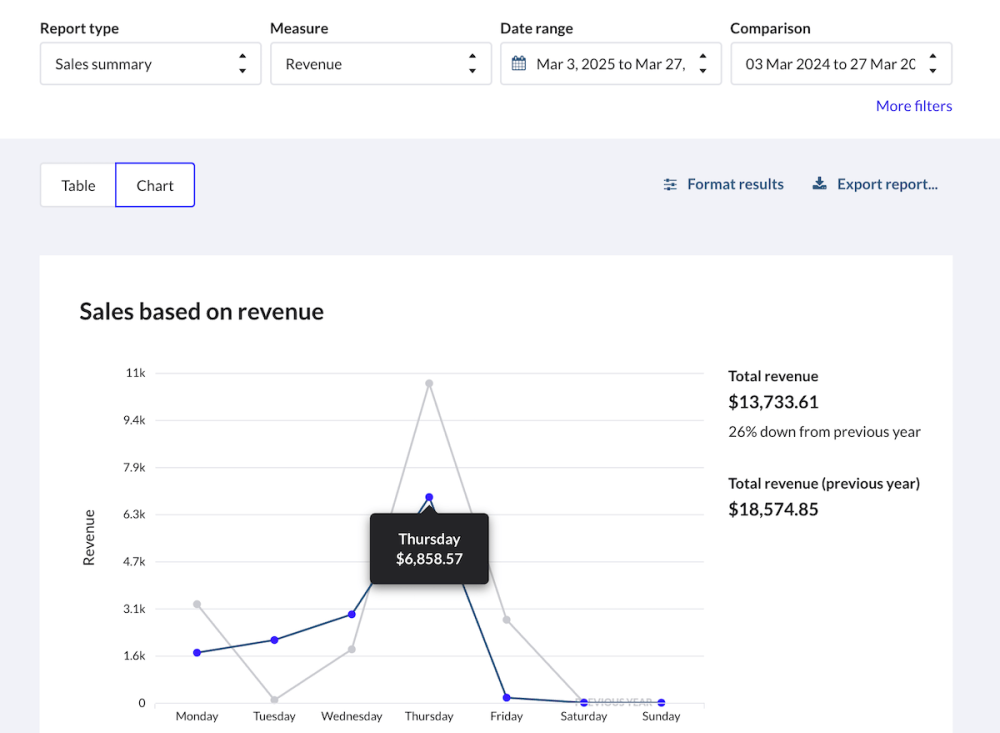
Sales summary report, Lightspeed Retail
A helpful benchmark is this: your team should be able to hit its goals roughly 70% of the time. If your targets are missed more than 70% of the time, recalibrate. If they’re hit 90% of the time with little effort, raise the bar.
2. Properly manage sales quota frequency and timeframes
Most retailers define their high-level revenue goals annually or quarterly. But when it comes to motivating your team, shorter cycles often work better. Weekly or even daily quotas give employees more immediate feedback and prevent the “I’ll make it up later” mindset that can happen with longer reporting periods.
Shorter timeframes also help lower-performing associates stay engaged. If someone has a slow start to the month, a daily goal gives them a fresh opportunity to reset and succeed—reducing the chance they disengage for the rest of the period.
Keep in mind that frequent quotas can unintentionally shift employee focus toward lower-priced, easier-to-sell items, increasing units sold but reducing overall profitability. To prevent this, pair daily or weekly sales targets with incentives that highlight high-margin or strategic products.
3. Clarifying your team’s targets makes it easier to achieve retail sales goals
Vague goals like “sell more” or “boost revenue” won’t help your team understand what success looks like or how to achieve it. Clear expectations do. That’s why effective retail sales targets should always be SMART—specific, measurable, attainable, relevant and time-based.
Here are some examples of SMART retail sales goals that give employees precise direction:
- enroll 10 new loyalty members per day
- increase total sales by 20% by month-end
- improve average order value by 15% this quarter
These goals work because they tell your team exactly what to aim for and when. They convert big-picture ambitions into actionable daily behaviors your sales associates can execute confidently.
Communicating your sales targets or goals
You’ve set your targets—great. But simply announcing them once won’t move the needle. To keep goals alive, relevant and actionable, you need to communicate them clearly, consistently and in ways that naturally integrate into your team’s day-to-day routine.
Here are effective ways to keep those goals front and center:
4. Talk up your goals throughout the day
Sales performance improves when expectations stay visible and top of mind. Rather than mentioning goals only during morning huddles or at the end of the day, weave them into regular touchpoints.
A few minutes at the start of each shift reviewing the day’s targets, current progress and any opportunities ahead can energize your team and create a shared sense of purpose. Mid-shift check-ins can help employees course-correct, stay motivated and understand how their actions contribute to the store’s overall results.
5. Make those sales targets visible
When it comes to achieving your sales targets in retail, remember that people perform better when they can see what they’re working toward. Physical visibility reinforces focus, accountability and momentum.
Start with the basics:
- a simple sales board or dashboard in the back room
- real-time updates that show progress toward daily or weekly goals
- recognition of top performers or milestones hit
To take visibility further, use your POS system. A modern POS system should allow you to set sales goals by employee, track progress in real time and display that information where it’s most useful.
For example, in Lightspeed Retail, employees can view their individual targets directly from the home screen through a dedicated “Your Sales” section with a progress bar and sales history graph. This makes it easy for staff to self-monitor performance without waiting for a manager’s intervention.
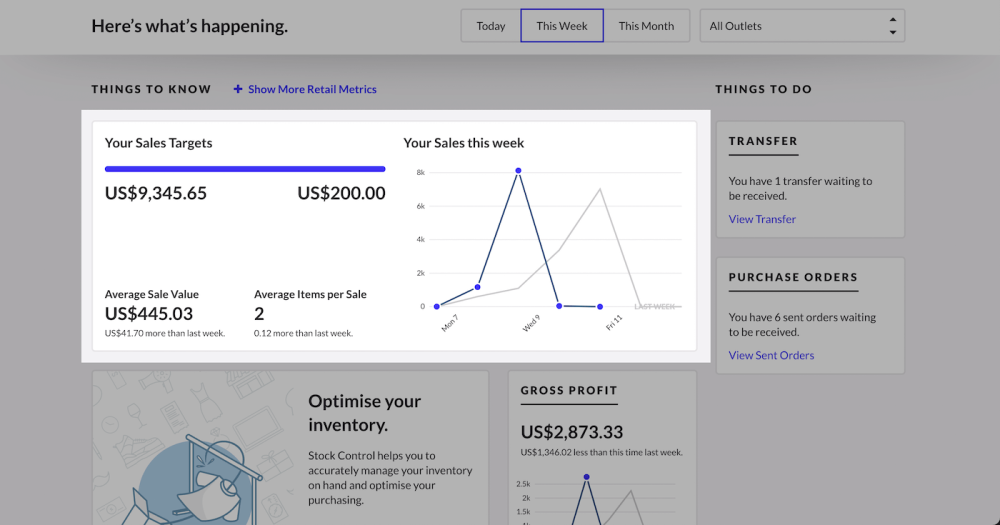
Individual sales targets in Lightspeed Retail
If you want even more on-the-go visibility, mobile apps like Lightspeed Reporter let you access real-time metrics from your phone—ideal for busy owners and managers. With mobile dashboards and widgets, your key performance data stays at your fingertips, helping you support and coach your team proactively.

Motivating your sales team to achieve retail sales goals
Posting sales goals is one thing—energizing your team to reach them is another. Motivation plays a critical role in whether targets are merely set or actually met. The key is creating an environment where employees feel supported, recognized and incentivized to perform at their best.
Below are a couple of practical ways to cultivate a motivated, goal-oriented team culture:
6. Have your team share the store’s sales goals
Individual commissions and bonuses can be powerful motivators, but they can also create an every-man-for-himself mentality where employees focus only on their own numbers. One effective way to encourage collaboration is to pair personal targets with a shared storewide goal. Rewards or bonuses are unlocked only when both the individual and store goals are met
This structure can help ensure the entire team stays aligned around the store’s broader objectives—not just personal outcomes. However, shared reward structures can sometimes create tension if high performers feel that underperforming team members limit their ability to earn incentives. Clear expectations, open communication and consistent coaching are essential to success.
7. Gamify the process
Gamification can dramatically boost motivation because it makes sales activity engaging, measurable and fun. The goal isn’t to introduce gimmicks—it’s to encourage behaviors that elevate the customer experience and get results.
Here are just a few proven gamification ideas for retail teams:
- Mini-challenges tied to desired behaviors: Reward actions and behaviors that contribute to success, like strong customer greetings, thoughtful product recommendations or upselling at the register. A rotating “challenge of the day” keeps things fresh.
- Micro-rewards for hitting milestones: Small incentives—gift cards, extra break time or even just great snacks—can spark friendly competition and keep energy high.
- Whole-team rewards: For goals that require collective effort, offer shared incentives like a team lunch or choosing the next day’s playlist. These build camaraderie and celebrate team victories.
- Raffles: Let employees earn entries into a raffle by selling high-ticket items, hitting specific sales targets or simply executing desired behaviors consistently. This balances motivation with cost-effectiveness while keeping the reward exciting.
When used thoughtfully, gamification shifts sales from a pressure-driven process to an engaging one—helping associates stay sharp, enthusiastic and customer-focused.
Training employees for better performance
If your employees still are not meeting their sales targets despite constant reminders and motivation, it’s often a sign that they need stronger training—not more pressure. Here’s how to build training that actually drives performance.
8. Make sure employees know the store’s products inside and out
To sell effectively, your sales associates need more than a surface-level understanding of your assortment. They need to know what each product is, why it matters and who it’s best for.
Here are a couple of good ways to help your team move beyond basic product descriptions so they can better connect with (and sell to) customers:
1. Use the FAB formula. A reliable framework for building product expertise is the FAB model—which stands for features, advantages and benefits.
- Features: the characteristics of a product
- Advantages: what the product or the features can do
- Benefits: what the customer can get out of the product and its features
The strongest pitches always lead with benefits, because customers care most about how a product will improve their life—not just what it does. For example, let’s say you’re selling a jacket with an inside pocket:
- Feature = an interior zip pocket
- Advantage = the pocket is discrete and secure
- Benefit = customers can store essentials safely while traveling or commuting
Small shifts like this help customers see real personal value, which makes purchases feel more meaningful.
2. Conduct unboxing sessions. When new products arrive, conduct short unboxing or walk-through sessions. Let employees handle the merchandise, ask questions and explore the details. Engaging with a product in a tactile way helps associates understand its quality, purpose and benefits, allowing them to develop authentic, confident talking points on the floor.
Pro tip: Turn your unboxing sessions into social media content, so you’re not only deepening your team’s product knowledge but also creating engaging content your customers will love. (Two birds, one stone!)
9. Train employees in the art (and science) of sales
Product knowledge is powerful, but selling requires technique, too. Build ongoing training around the core skills that drive conversions and customer satisfaction, including:
- active listening
- asking open-ended questions
- upselling and cross-selling
- handling objections with empathy
Leverage your POS insights and individual performance reports to learn who’s selling and who’s struggling, and use those insights to guide your employee coaching strategy. Here’s a peek at what that looks like in Lightspeed Retail:
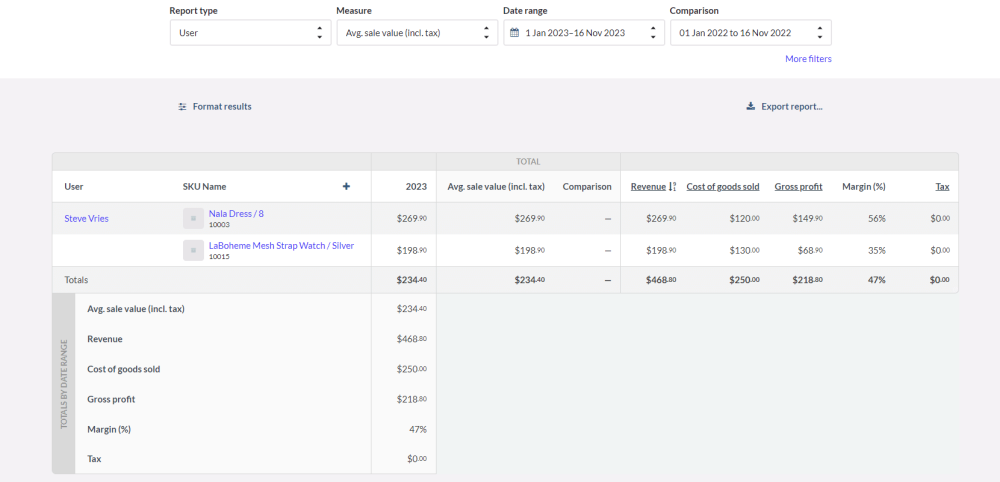
Individual performance report, Lightspeed Retail
Short, frequent training sessions—whether through role-playing, coaching on the floor or quick refreshers during team meetings—are often more effective than occasional long workshops.
Building a store that’s conducive to increased retail sales
Your sales team can only perform as well as the environment around them. Your store layout, product assortment and visual experience directly influence how customers shop—and how confidently associates can sell.
10. Drive ample foot traffic
Your team can’t sell if shoppers aren’t walking through the door. Consistent foot traffic gives your associates more opportunities to convert browsers into buyers.
A few proven ways to boost in-store foot traffic include:
- refreshing your window displays to highlight new arrivals, seasonal products or high-impact hero items
- hosting events or demos that create excitement and encourage repeat visits
- running targeted promotions—especially time-bound ones—to spark urgency
- optimizing your local presence through accurate Google Business listings, local SEO and targeted ads
The goal isn’t just to attract more people—it’s to attract the right people. When traffic aligns with customer intent, conversions increase naturally.
11. Have a winning assortment
Even the most talented salesperson will struggle if the merchandise isn’t resonating with your customers. A strong assortment strategy ensures your store carries the products people want—and displays them in a way that inspires them to open their wallets.
Consider these pillars of a winning assortment:
- Know your customer. Use sales and customer data, loyalty insights and market trends to understand what shoppers are actively searching for—and what gaps you can fill. A wholesale B2B platform like Lightspeed NuORDER can help you discover trending and best-selling collections ahead of market.
- Offer the right mix. Customers want choice, but too many can leave them overwhelmed, and have them leaving empty-handed. Curate your assortment intentionally.
- Use data to accurately forecast demand. Track what sells, what stagnates and what consistently performs across seasons to make smarter purchasing decisions.
- Merchandise intentionally. Showcase your key products in high-visibility zones such as power walls, end caps or feature tables. Refresh these areas often to keep the store feeling new and exciting.
The right assortment doesn’t just increase sales—it makes selling easier for your team because the products naturally align with customer needs and preferences.
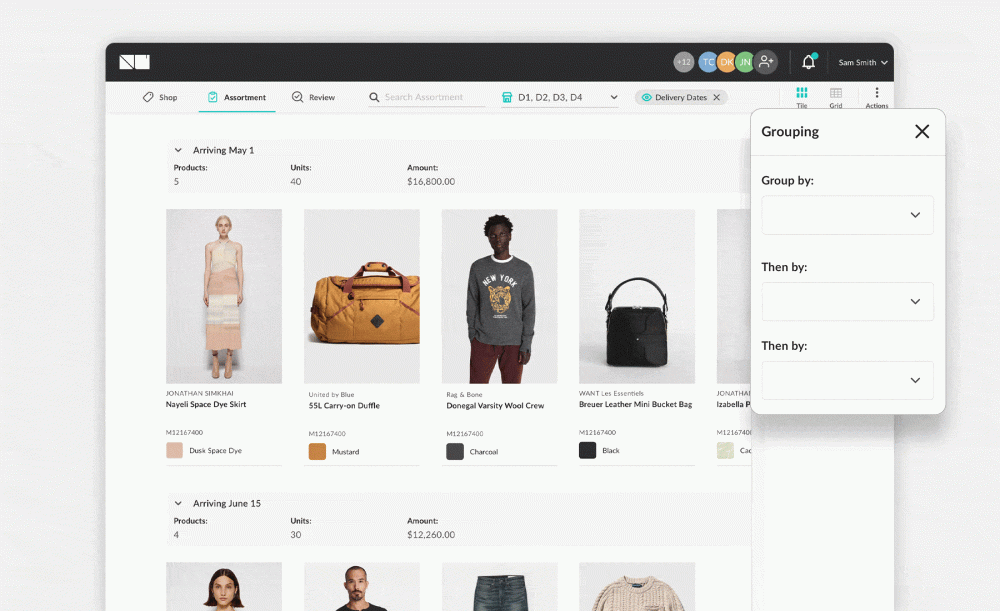
Assortments for retailers in Lightspeed NuORDER
Building strong customer relationships
Retail success goes far beyond single transactions. When customers feel genuinely connected to your brand, they’re more likely to buy, return and recommend your store to others.
12. Deliver personalized, customer-first service
Personalized service isn’t just a nice touch—it’s a competitive advantage. In a recent survey, 70% of consumers said personalization was a key factor influencing their loyalty. Tools like customer profiles in Lightspeed POS equip your sales associates with customer purchase history, preferences, loyalty rewards, lifetime value and notes, so they can treat every customer like a VIP.
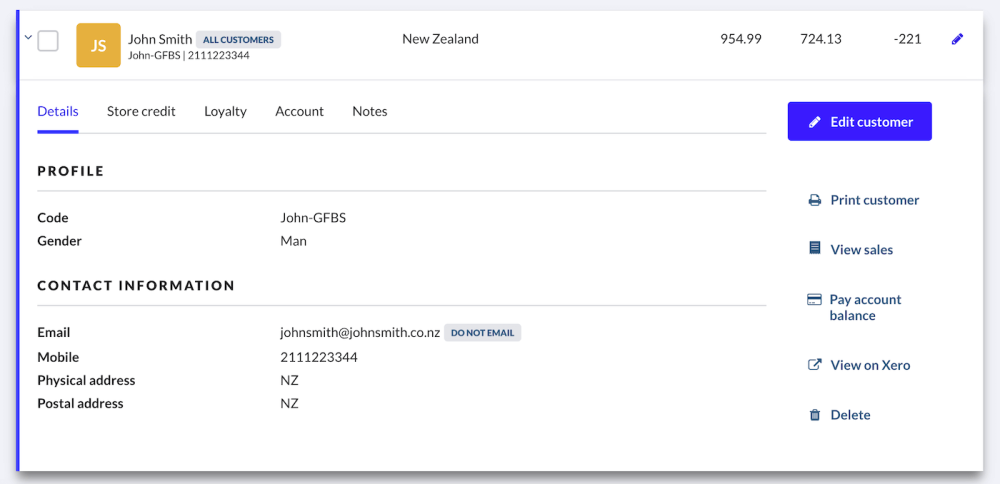
A customer profile in Lightspeed Retail
13. Use loyalty programs to strengthen retention
A well-designed loyalty program gives customers a reason to keep coming back. Whether you offer points, perks, early access or members-only promotions, loyalty tools help you reward frequent shoppers and gather valuable insights about their behavior. And when your loyalty program connects seamlessly with your POS and marketing tools, you can deliver meaningful, tailored rewards that make customers feel recognized—strengthening the relationship with every visit.
14. Nurture relationships beyond the sales floor
Connections shouldn’t stop when customers leave the store. Use social media, email and SMS marketing to stay top of mind with relevant, timely content. Advanced marketing integrations—including personalized email journeys, targeted SMS campaigns or product recommendations based on purchase history—help you extend the same level of individualized service beyond the checkout counter.
Letting customers pay how they want
Today’s shoppers expect flexibility at checkout; limiting payment options introduces friction that can cost you sales.
15. Offer flexible payment options
Digital wallet adoption is growing rapidly worldwide, making flexible payment options not just a convenience, but a critical part of how you achieve sales goals. When checkout becomes effortless, customers are more confident—and more likely—to complete their purchases.
Beyond traditional cash and card payments, look for a POS/payment processor that enables you to accept payments via:
- digital wallets like Apple Pay and Google Pay
- buy now, pay later (BNPL) options
- gift cards
- contactless payments such as NFC-enabled wearables
Tracking your sales goals
Setting smart goals is only half the job; the other half is knowing how well you’re performing against them. Tracking your progress helps you spot trends early, recognize wins, address problem areas and adjust your strategy before small issues become big ones. Here’s how to track your sales goals like a pro:
16. Let data guide your next move
Start by monitoring core metrics such as total sales, gross profit, customer count, average sale value and more. Then, connect those insights to your business’s performance—who’s crushing their quotas? Who needs more coaching? Which locations are selling out of inventory and which are collecting dust? Which promotions or displays are moving the needle?
Modern POS and reporting tools make tracking your retail sales goals far easier. Solutions like Lightspeed Retail POS give you real-time dashboards, mobile reporting and customizable views of the KPIs that matter most. Whether you’re in the store or on the go, you’ll always know exactly where you stand—and what you need to do next to hit your targets.
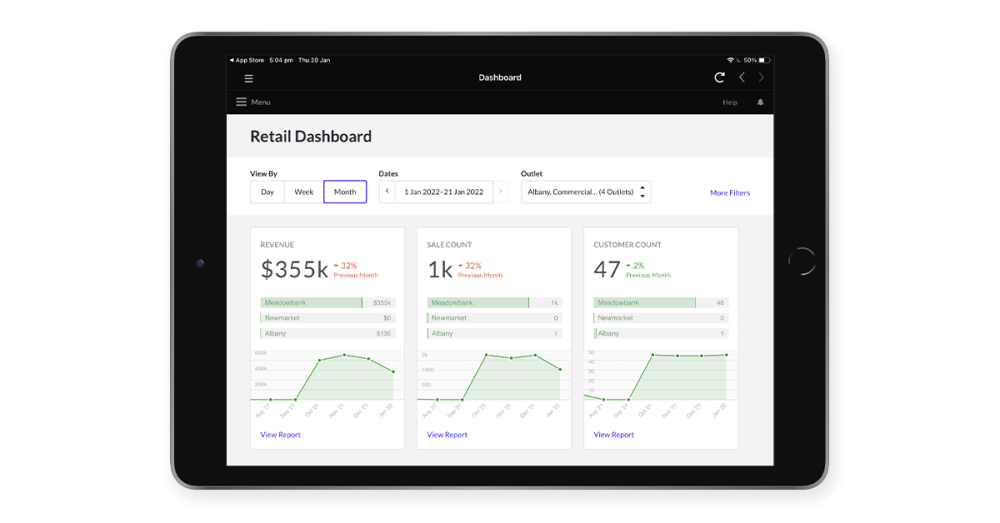
Consistent tracking keeps your team focused, informed, and aligned with the goals you’ve set. When everyone has visibility into the numbers, meeting your sales goals becomes a shared victory instead of a shot in the dark.
TL;DR
To meet—and beat—your retail sales goals, focus on getting the essentials right:
- Set specific, realistic targets using the SMART goal framework, performance data and benchmarks.
- Communicate goals consistently and make them visible so your team always knows what they’re working toward.
- Motivate your staff with shared wins, incentives and gamification.
- Invest in employee training so associates understand your products and how to communicate their benefits.
- Set your sales team up for success by boosting foot traffic with events, promos, intentional assortments and effective merchandising.
- Build customer loyalty through personalization, rewards programs and ongoing marketing campaigns.
- Offer flexible payment options to keep checkout seamless and capture more sales.
- Track your results in real time and use performance insights to coach your team and refine your strategy.
With the right goals, tools and team alignment, achieving and even exceeding your retail sales targets becomes not just possible—but predictable.
Want to see how Lightspeed can help you achieve your sales goals? Talk to a POS expert today.

News you care about. Tips you can use.
Everything your business needs to grow, delivered straight to your inbox.