
As a retailer, you likely take a number of credit and debit card payments every day—but have you ever wondered how long it takes to process a transaction from the time you take the payment until the funds are deposited in your business bank account? And why?
In this blog, we’ll cover:
- How long does a credit card payment take to process?
- Other types of payments and how long they take to process
- When are the transaction fees taken out of a payment?
- Why does it take so long for credit card payments to post?
- How does payment processing work?
- What happens if your credit card payment is still pending?
- Factors that affect credit card payment processing time
- How do you track a transaction’s processing status?
- Process transactions securely with Lightspeed Payments
See Lightspeed in action
Lightspeed is the unified ePOS and Payments platform powering ambitious entrepreneurs in over 100 countries.
How long does a credit card payment take to process?
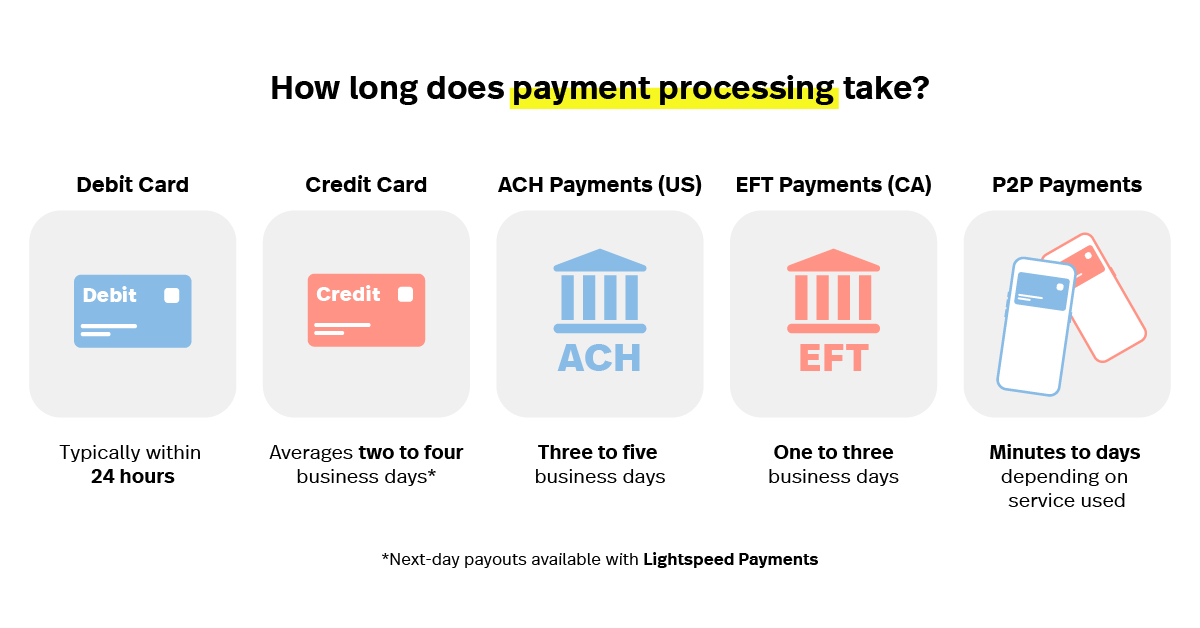
Generally, it takes two to four business days for payments to be processed from the customer’s card, through the bank and to your account.
This means if you process a payment on Friday, you’ll receive the funds on Tuesday. Payments taken on weekends and bank holidays are sent along with the batch of payments collected on the next weekday—you’ll receive funds from Saturday, Sunday and Monday at the same time.
Some payment processors, like Lightspeed Payments, take less time on average, allowing for next-day payouts.
With both Lightspeed Payments and other third-party payment processors, these times are not set in stone—unusually large settlements may take longer to process, for example.
Other types of payments and how long they take to process
Not all payments are processed the same way, and as such, not all types settle at the same rate.
Debit card payments
Debit card payments generally settle within 24 hours.
ACH payments
Automatic Clearing House (ACH) payments are direct payments transferred electronically in the United States. They do not involve credit cards, cheques or cash. Businesses taking subscription payments may do so through ACH.
Right now, ACH payments take three to five business days to clear. Nacha, the organization that governs the ACH network, has voted to build infrastructure for same-day ACH payments, but that will take time to get up and running.
What about EFT payments?
In Canada, Electronic Fund Transfer (EFT) payments take the place of ACH. EFT payments clear faster than ACH payments, typically within one to three days.
Peer2peer
Peer2peer (P2P) payments connect to a bank account or credit card and allow for fund transfers between customers of a P2P network.
Generally, P2P payments can be used immediately if used within the P2P network; transferring those funds out of the network and into a bank account can take a few days. Services like Zelle (in the US) and Interac e-transfer (in Canada) are the exception, as they deposit immediately.
Contactless
Contactless payments, where customers tap an EMV-enabled chip card or a capable mobile phone to a card reader, are on the rise. More than half of Americans use them to pay.
Like inserted or swiped cards, contactless payments generally take two to four days to settle.
When are the transaction fees taken out of a payment?
Fees are automatically deducted from payments before they’re deposited into your account, so you don’t have to worry about paying them yourself every single time you process a transaction.
The exact amount deducted from your funds will depend on the fee structure you have with your payment processor. When you’re in the process of finding a payment processing provider, look out for hidden transaction fees.
If you’re working with an interchange plus fee structure, each transaction will have a different fee applied to it thanks to variables in card type, issuing bank, entry type and more—you have no way of knowing the final amount that will be deposited into your account.
If you’re working with a tiered fee structure, you’ll have a set percentage and transaction fee for each transaction tier. Typically, qualified transactions will have a favorable rate, while mid-qualified and non-qualified transactions will cost you a lot more. Unfortunately, you get no say over how your transactions are classified, and the majority of your transactions are likely to be processed with the less favorable rates.
If you’re working with a flat fee structure, you’ll have one fee for card-present (CP) transactions and one fee for card-not-present (CNP) transactions, no matter the card type. You can calculate the expected amount you’ll be paying on each transaction by applying the flat rate for that transaction type.
Flat fee structures can help you avoid unexpected hits to your revenue. Jewelry retailer Melissa Joy Manning ditched unpredictable fees with a flat percentage fee from Lightspeed Payments. “With credit card processing fees and bank fees, we’re always trying to lower them because that’s just money out the door.”
Why does it take so long for credit card payments to post?
Payment processors generally don’t process every single payment at once. They batch payments together and send them for processing all at the same time. This can happen as quickly as twice a day, or as rarely as twice a week.
There’s another reason for the delay: fraud detection. After the initial verification at checkout, the card issuers can take a day or two to investigate purchases. This is why bigger transactions take longer to clear—they have a bigger impact if they’re fraudulent, so the card issuer is incentivized to take their time.
Do credit card payments process on weekends?
No, credit card payments are not processed by banks on the weekends.
Once the payments have been batched and sent to process, they’re at the mercy of the card network and the bank. Banks don’t operate on 24/7 schedules, and instead only process payments during work hours.
How does payment processing work?
Payment processing happens in stages. The first stages, authorization and authentication, happen in-store when a customer buys something from you—these stages verify the payment. The steps involved in verification usually only take a few seconds in total.
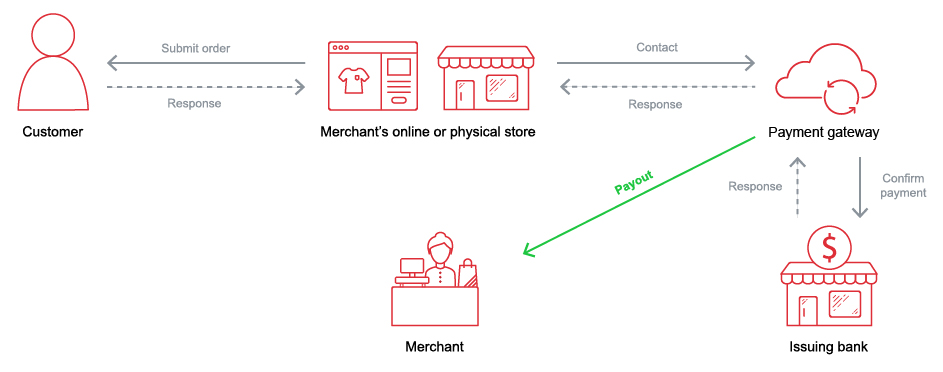
- A customer taps, inserts or swipes their debit or credit card at your point of sale. The information needed to verify the transaction is sent to your processor.
- Your processor authorizes the payment with the card’s network, such as Visa or Interac.
- After the payment has been authorized, it needs to be authenticated. The card’s network sends the information needed to confirm the card’s validity to the customer’s issuing bank.
- The bank verifies that the card is being used legitimately and has access to the funds or credit card limit required to complete the sale, then either approves or declines the transaction. This is the end of the sale in your store.
Every transaction you make at your payment terminals is gathered together into a batch to be sent for processing. That batch is sent off to be processed in the third stage, settlement—this is the part that typically takes two days.
- At a set time every weekday, your daily batch of authorized and authenticated payments are sent to your payment processor for settlement.
- Your payment processor takes care of forwarding transactions in the batches to the appropriate card networks, who then request the funds from the issuing banks.
- The funds are sent to you and your customers have the transaction added to their credit card bill or automatically debited from their account.
What’s the difference between payment verification and payment processing?
Payment verification involves the authentication and authorization stages and happens immediately. Authorization and authentication ensure the funds are available to be deposited in your account by placing a hold on them. Until the funds have been transferred to you through the settlement process, the money is effectively in limbo between you and the customer.
Payment processing involves the settlement stage and takes time to process. This moves the funds owed to you into your account as the payments are cleared. The money has been taken out of limbo and paid to you.
What happens if your credit card payment is still pending?
For merchants, a pending credit card payment means the transaction has been authorized by the customer’s card issuer but has not yet been fully processed and settled into the merchant’s account. This is a normal stage in the payment lifecycle and does not necessarily indicate an issue with the transaction.
When a customer makes a purchase, the merchant submits an authorization request through the payment processor. The card issuer then verifies that the customer has sufficient available credit and may perform fraud and security checks before approving the transaction. Once approved, the transaction enters a pending status.
The payment then moves through the settlement process, during which the transaction is submitted for final processing through the payment network. Settlement times can vary depending on factors such as the:
- Payment processor
- Acquiring bank
- Card network
- Transaction volume
- Weekends or holidays
- Additional fraud reviews or verification requirements
In most cases, pending transactions are settled and deposited into the merchant’s account within one to three business days, though timelines may vary by provider. If a transaction remains pending for an unusually long period (typically more than five business days) merchants should review their payment processor dashboard or contact their payment provider to determine whether additional action is required.
Understanding pending transactions can help merchants better manage cash flow expectations and identify potential processing delays before they impact business operations.
Pending vs Posted Transaction
| Feature | Pending Transaction | Posted Transaction |
|---|---|---|
| Status | Authorized but not fully processed | Fully processed and settled |
| Funds Availability | Reduces available credit immediately | Included in your official account balance |
| Merchant Payment | Merchant has not yet received final funds | Merchant has received payment |
| Can Amount Change? | Sometimes, especially for tips, hotels, or gas stations | No, the final amount is confirmed |
| Appears on Statement | No | Yes |
| Eligible for Disputes | Usually not until posted | Yes, typically eligible for dispute processes |
| Typical Duration | A few hours to several business days | Permanent transaction record |
Factors that affect credit card payment processing time
Credit card payments don’t always process at the same speed. While many transactions are completed within one to three business days, several factors can influence how quickly a payment moves from authorization to settlement.
Payment method used (online, mobile app, bank transfer)
The payment method can affect processing times. Payments made through a card issuer’s website or mobile app are often processed faster than bank transfers or payments initiated through third-party services.
Time of payment submission
The time you submit a payment matters. Payments made before a lender’s daily cutoff time are typically processed the same business day, while payments submitted after the cutoff may not begin processing until the next business day.
Weekends and public holidays
Most banks and payment networks process transactions only on business days. Payments submitted on weekends or public holidays may experience delays until regular banking operations resume.
Bank processing policies
Each financial institution has its own payment processing procedures and settlement schedules. Some banks update account balances immediately, while others may take additional time to verify and post transactions.
Payment gateway or processor used
For merchants, the payment gateway and processor play a significant role in transaction speed. Some processors offer faster settlement times, while others may hold transactions for additional verification or batch processing.
International vs domestic transactions
International transactions generally take longer to process than domestic payments. Currency conversion, cross-border regulations, and additional fraud screening requirements can extend settlement timelines by several days.
Understanding these factors can help both consumers and merchants set realistic expectations for when payments will be completed and funds will become available.
How do you track a transaction’s processing status?
If a payment is taking longer than two days to process, you may want to check in on its status.
You also want to track the breakdown of card types in your batches, particularly if you find you’re paying for expensive interchange plus fees.
How can a business get visibility on transaction processing status?
Unfortunately, there is no way to easily track the status or breakdown of a batch of payments through your acquiring bank or your customer’s issuing bank.
However, your payment processor may provide you with reports to check this data. While not all of the reports from all processors are easy to read, some–such as Lightspeed–have developed clear tools for Lightspeed Payments users to access with the click of a button.
If you’re using Lightspeed Payments, you can easily track the status of your settlements with the merchant portal. Let’s take a look at what information you could find.
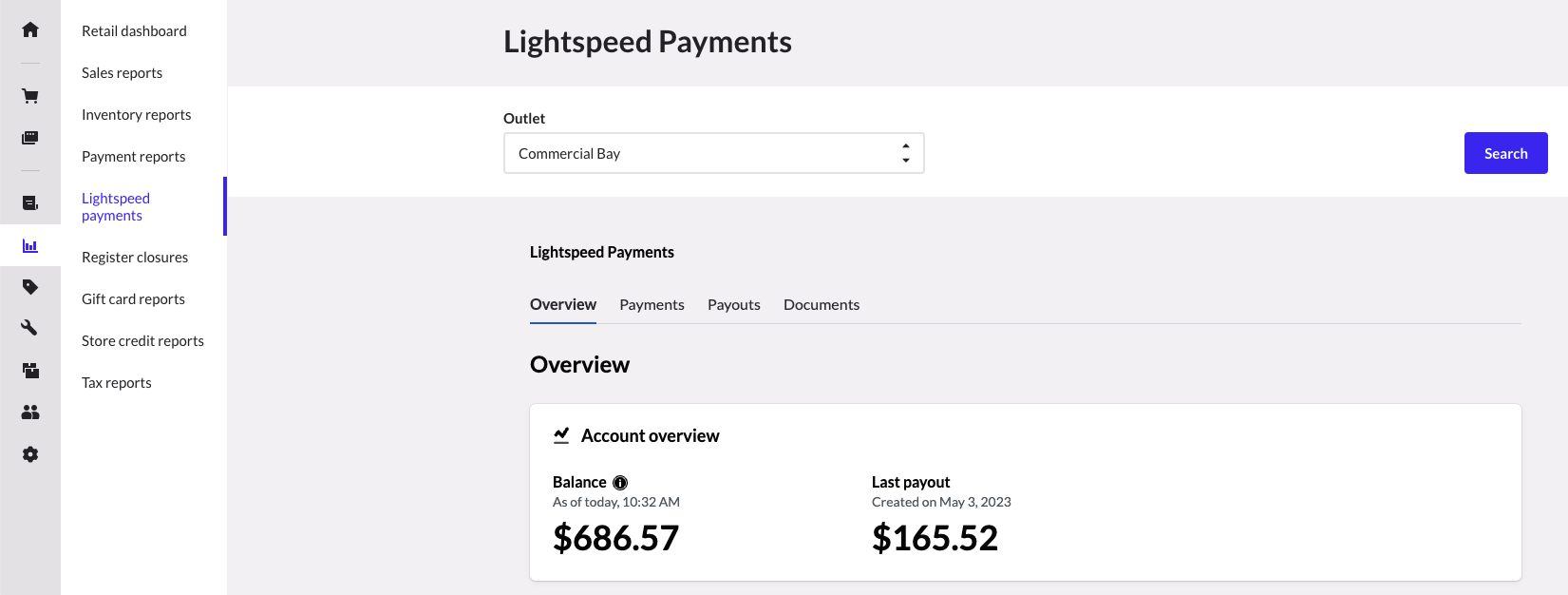
Whenever you make a sale through your payment terminal, that transaction will be added to the merchant portal for easy reference. These transactions are batched together into settlements. Settlements marked as paid have been processed and had their funds forwarded to your bank from Lightspeed Payments.
The payments summary will show you transactions and their card types, such as American Express or Visa. You can also clearly see the fees you’re paying on the summary.
You can also check the details of a payment, including:
- Transaction date and time
- Payment Method
- Processor ID
- Timeline
- Authorized amount
- Captured amount
- Fee
- Device
- User
- Net amount
- Payment ID
- Order ID
Process transactions securely with Lightspeed Payments
Debit and credit cards, as well as mobile wallets and digital payments, are the overwhelming preferred payment method with customers, with cash consistently rated as the least preferred. By not opting to process debit and credit card transactions, retailers risk losing sales from cash-averse customers.
Rather than take that risk, merchants should start accepting card transactions to maximize their sales.
Rather than work with third-party payment processors and their notoriously complex contract agreements, consider using Lightspeed Payments, payment processing that’s embedded directly with your retail POS system.
We take the hassle out of taking payments, even when your customer wants to use their American Express card. Get built-in PCI compliance and stop worrying about third-party accounts—we’ll take care of that for you.
FAQs about time it takes for credit card payment to process
How long does it take for a credit card payment to go through online?
Online credit card payments typically take one to three business days to fully process and settle into your account. While transactions are usually authorized instantly, funds are not immediately deposited. Some processors may show updated pending balances or early funding visibility, but final settlement still occurs in the background. Timing can vary based on the payment processor, acquiring bank, and batching schedules, with full posting completed once settlement is finalized.
Why does it take 3 days for a credit card payment?
A payment may take up to three business days because it must pass through several stages, including authorization, bank verification, fraud screening, and settlement between financial institutions. Processing times can also be affected by weekends, holidays, and issuer-specific policies.
Do credit card payments clear immediately?
Not always. While some card issuers provide instant payment confirmations or update available credit right away, the actual transaction usually requires additional processing before it is fully posted and settled. Most payments are completed within a few business days.
How can you speed up the credit card payment process?
Merchants can’t fully control payment processing speed, but they can reduce delays by choosing a payment processor that offers faster settlement options, such as same-day or next-day funding. Prompt transaction batching and settling before cutoff times also helps speed up fund availability. Using fraud prevention tools like AVS and CVV checks can reduce review-related holds. It’s also best to avoid heavy processing right before weekends or holidays. Maintaining accurate transaction data and monitoring processor reports further helps minimize delays and improve cash flow predictability.

News you care about. Tips you can use.
Everything your business needs to grow, delivered straight to your inbox.